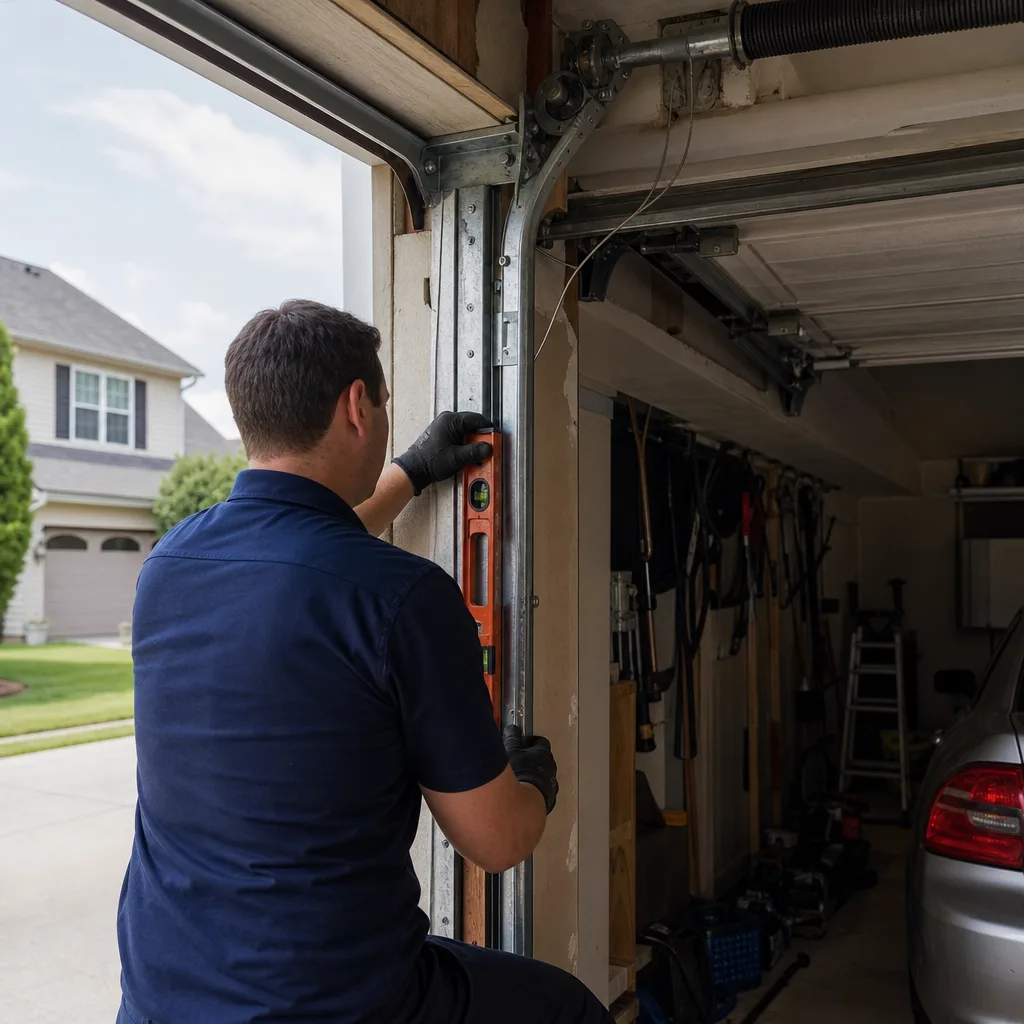
Last updated November 20, 2026
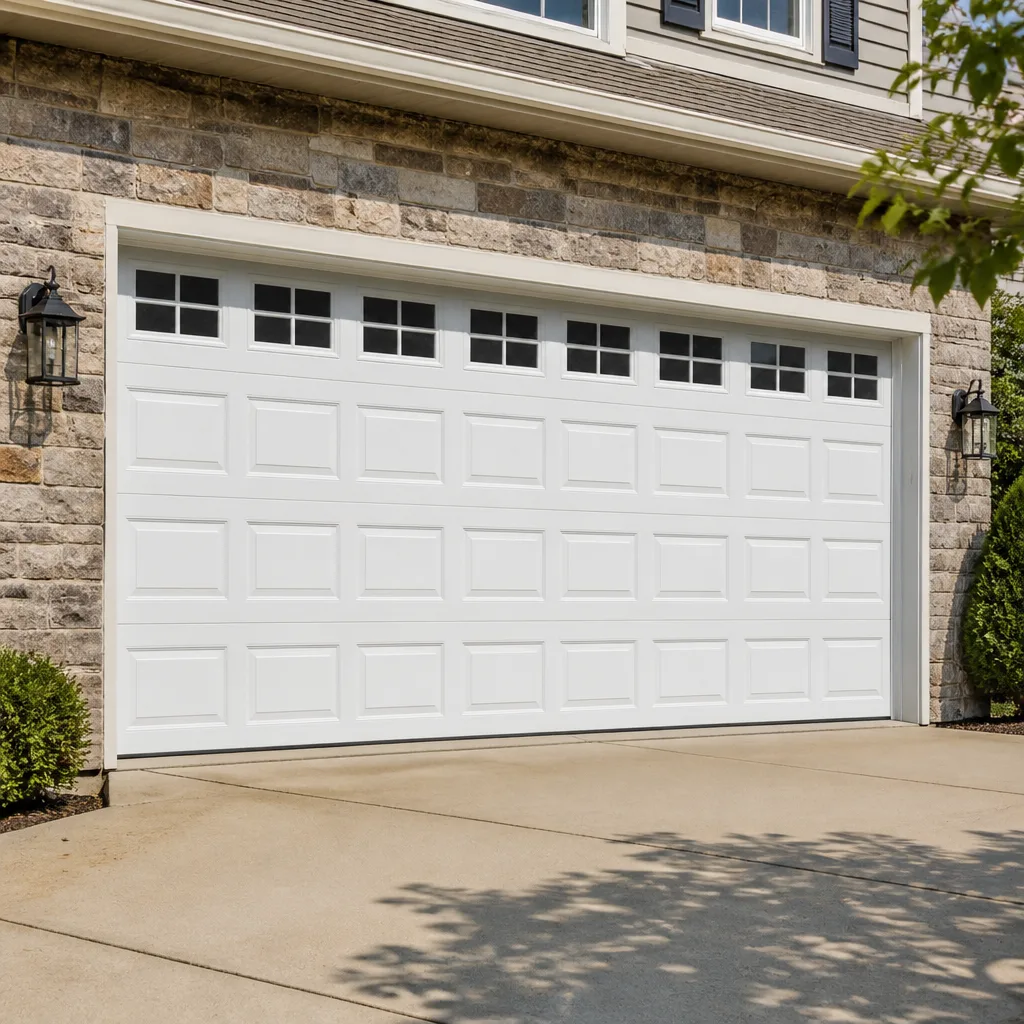 Raised-panel steel
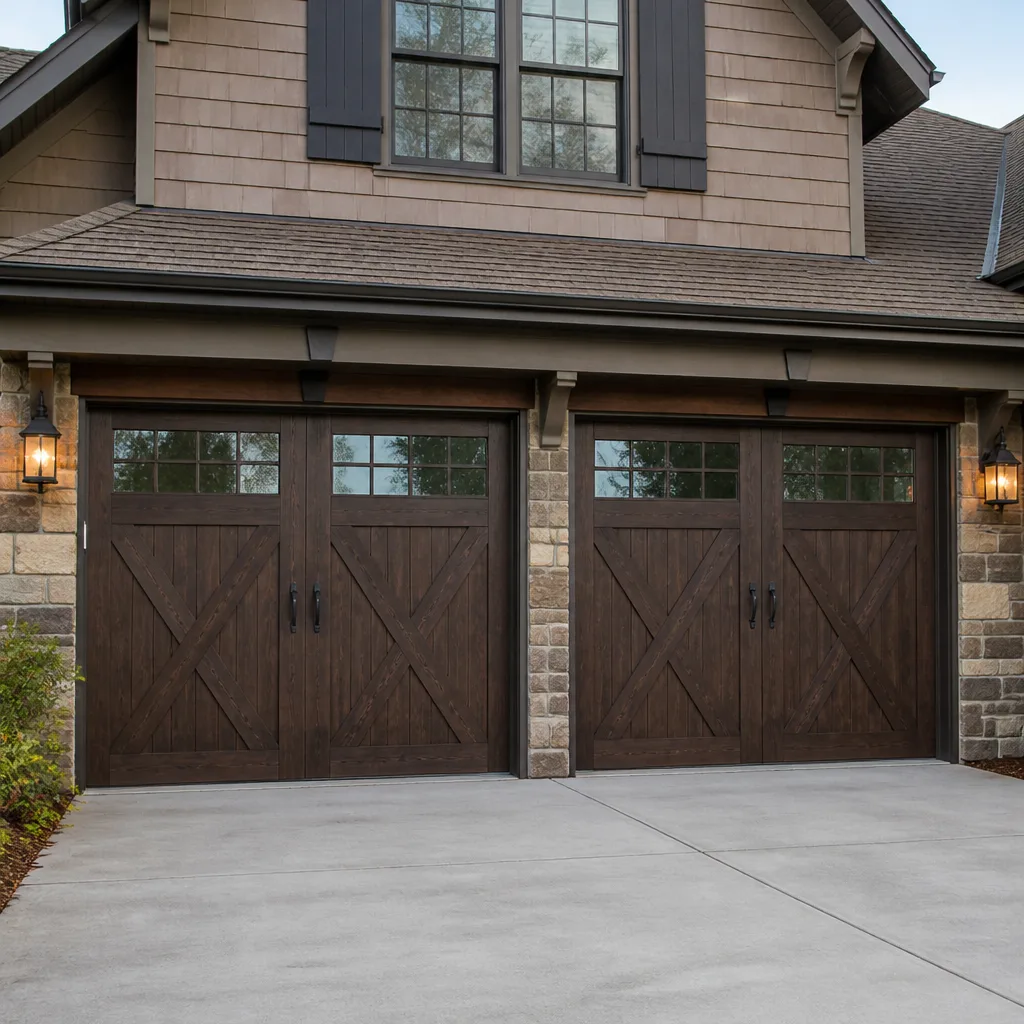 Carriage house
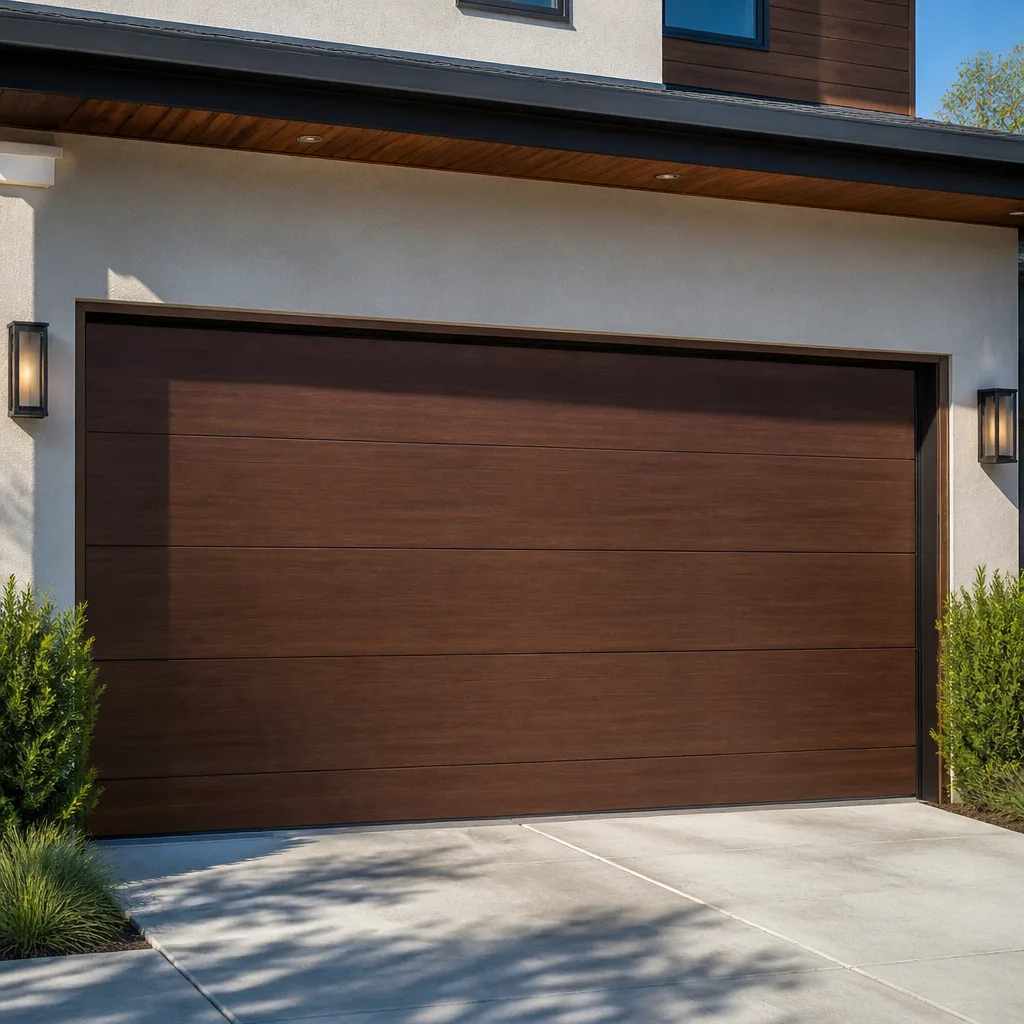 Modern flush
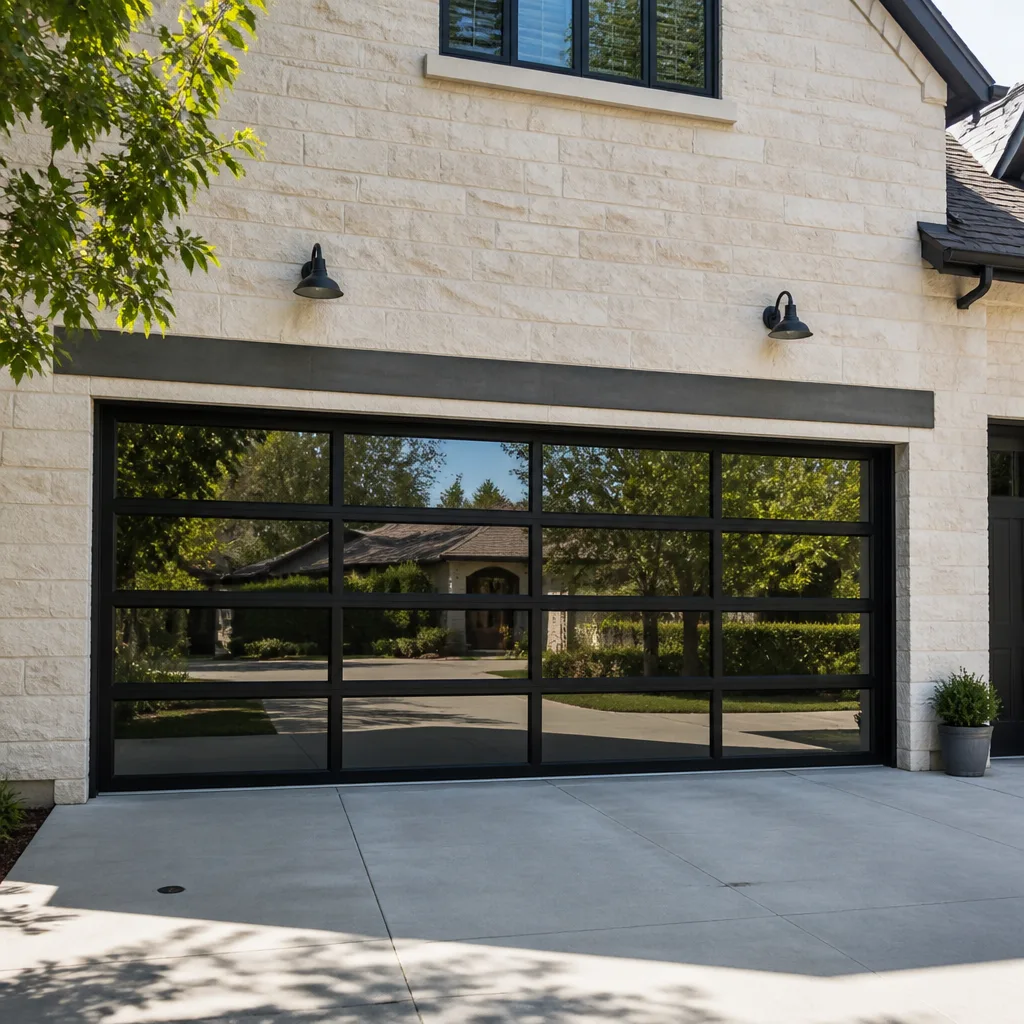 Full-view glass
 LiftMaster openers
 Chamberlain openers
Full 25-point door and opener safety check with every visit - springs, cables, rollers, tracks, and your LiftMaster or Chamberlain opener included
You get a price before we start. It does not change when the pro arrives.
Get your free estimateGarage Door Warning Signs: A Northwood Homeowner’s Reference Guide
A garage door doesn’t snap, slam, or fail without first telling you it’s going to. The problem is that the signals – a quarter-inch gap in cable tension, a 3-second hesitation on reversal, a faint grinding at the top of travel – are easy to rationalize as “normal for an older door.” They’re not. Each one maps to a specific component approaching failure, and the gap between a routine repair and a full emergency call usually comes down to whether a homeowner recognized that symptom two to eight weeks earlier. This reference guide names those signals precisely, explains the mechanism behind each, and gives you a clear line for when to stop using the door and call a specialist in Northwood. We work on garage doors all day, and this is the breakdown we wish every homeowner had on hand.
Quick Answer
The most reliable warning signs of an imminent garage door failure are a visible gap or slack in the lift cables, a winding pattern of rust on the torsion spring coils, a door that reverses on contact or won’t stay level when you disconnect the opener, and any sudden change in the noise the door makes during travel. If a spring looks stretched or separated, or a cable hangs loose, stop using the door and call a technician before it fails completely. Catching these signs early is what separates a same-week repair from a middle-of-the-night emergency call.
Styles & brands we work with
- Raised-panel steel
- Carriage house
- Modern flush
- Full-view glass
- LiftMaster openers
- Chamberlain openers
Table of Contents
- Spring and Cable Warning Signs: What Imminent Failure Actually Looks Like
- The Noise Taxonomy: Grinding, Scraping, and Popping Mean Different Problems
- Movement Irregularities: Why Jerky Travel Is Almost Never the Motor
- The 60-Second Balance Test That Reveals Spring Problems Early
- Opener Warning Signs: When the Motor Is Really the Problem
- When to Stop Using the Door vs. When to Schedule a Service Call
- Why Northwood’s Climate and Homes Make Some Signs More Urgent
- The Inspection Checklist: What to Look At Each Month
Spring and Cable Warning Signs: What Imminent Failure Actually Looks Like
The spring and cable assembly is where a garage door failure turns dangerous, and it’s the area most homeowners don’t inspect because they don’t know what to look for. A garage door’s torsion or extension springs carry the full weight of the door under extreme tension. When a spring is about to fail, it usually shows it well before it does. The key is knowing which visual signals mean “normal wear” and which mean “stop now.”
Here’s what imminent spring failure typically looks like versus ordinary aging:
- A visible gap between spring coils. Gaps that appear or widen over a few weeks mean the spring is losing tension and stretching. On a healthy spring, coils sit tightly together.
- Rust that winds along the coils like a spiral. This is the pattern worth flagging. Surface rust that patches a coil here and there is usually cosmetic. Rust that follows the wire’s winding and reaches into the coil’s seat indicates moisture working into the metal from the inside out, thinning and weakening the coil where it’s hardest to see.
- A stretched, elongated spring. Extension springs that have lost tension will visibly hang longer than they originally did. On torsion setups, a spring that no longer lifts the door with its original balance is doing the same thing internally.
- A cable that’s slack, kinked, or frayed. A lift cable should be taut at all times. Any slack is a sign it has slipped from its drum. Kinks and frayed strands are steps on the way to a snap.
- Cables hanging off the drum or wrapped unevenly. Uneven wrap on one side pulls the door out of alignment and is often the first visible sign before a door comes off its tracks entirely.
What’s normal wear? A light, even dust of rust on the outside of the coils, without the spiral pattern, and springs that still hold the door balanced. What’s not normal is anything that changes the geometry of the spring or repositions a cable. Those are the conditions that precede a break, and a broken torsion spring or snapped cable can send the door slamming down – which is why a spring job is one of the most technically demanding and safety-critical services in this trade. If your spring breaks, that’s not a DIY fix. Here’s why we handle it safely: we know the tension, the tools, and the failure modes.
In Northwood, spring and cable checks are worth a look whenever the seasons shift, because the local temperature swings put additional load on the metal. If you spot a gap, a spiral rust pattern, or a slack cable, don’t run the door again. Call (877) 492-1668 for a free estimate and we’ll tell you what you’re looking at over the phone.
The Noise Taxonomy: Grinding, Scraping, and Popping Mean Different Problems
Every sound a garage door makes points to a specific component, and treating them all the same is how a small fix becomes a large repair. Homeowners often describe any odd garage door noise as “grinding.” In practice, the type of sound – and where it happens in the door’s travel – tells you which part is degrading. Here’s a working vocabulary for it.
Grinding, coming from the rollers or hinges. A steady, low grind during travel usually means dry or worn rollers, or a hinge that’s lost lubrication. These are common, usually the least urgent, and typically addressed with proper lubrication or a roller replacement. If the grind is constant and louder at the curves of the track, the rollers are the first suspect.
Scraping, coming from high up or from one side. A metal-on-metal scrape near the top of travel is often a cable that has come off its drum or is rubbing where it shouldn’t. This is more serious than a roller. If scraping appears suddenly and repeats in the same spot each cycle, stop and look at the cables before you use the door again.
Popping or banging, especially when the door starts to move. A single sharp pop at the start of travel is frequently a torsion spring that has just failed or is failing. If the door suddenly feels very heavy and won’t lift, the spring is the reason, and the door should be considered out of service until a technician looks at it.
Rattling, at the hinges and brackets. Loose fasteners shake through a cycle. Usually fixable, but worth addressing before the vibration loosens something that matters more.
A single bang, then a door that won’t open. This is the classic signature of a broken spring. It is not a sound you investigate by continuing to press the opener button.
We’ve learned that Northwood homeowners hear these noises through walls and garages that share living space with the door, so the noise usually comes up before anything visible does. That’s fine. The point is to describe the sound precisely when you call. If you can tell us whether it’s a grind, a scrape, or a pop, and roughly where in the door’s travel it happens, we can often narrow the cause before we arrive. If the sound is a pop and the door now won’t lift, that’s a spring or an opener problem, and both fall under the repair work we do when you need garage door repair in Northwood.
Movement Irregularities: Why Jerky Travel Is Almost Never the Motor
When a door moves unevenly, the natural conclusion is that the opener motor is going bad. In our experience, that’s rarely the case. Jerky, uneven, or hesitant travel almost always traces back to the door’s mechanical balance and rolling hardware, not the motor that pulls it. Here’s what’s actually happening.
A garage door is counterbalanced by its springs. The opener motor’s job is small: it lifts the door once the springs have already done most of the work. When the spring tension weakens – from age, from temperature cycling, from use – the door starts requiring the opener to muscle through parts of its travel the springs used to handle. The result is a door that lurches, hesitates, or slows at certain points in the cycle. The motor is fine. It’s straining because the balance is gone.
Other movement symptoms map to other components:
- A door that jerks at one specific spot every cycle. Usually a worn roller or hinge binding at a fixed point, or a minor track deviation. Localized and diagnosable.
- Hesitation just after the door starts to move. Often the opener straining against weak springs, or a safety sensor issue if the opener is a modern connected unit.
- A door that drifts or stalls near the top of travel. Frequently an imbalance between the two spring sides, or track misalignment. Worth a look before the door comes off its tracks.
- A door that travels unevenly side to side. Track or cable issues, not the opener. A cable that’s come off its drum on one side will cause exactly this.
- A door that won’t reverse on contact with an obstruction. A safety issue. Many doors built before the mid-1990s lacked a proper automatic reversal system, but any modern door that fails this test should be taken out of service.
We service all of the major opener platforms, which helps here because some of the behavior is system-specific. On a LiftMaster or Chamberlain unit, a diagnostic code on the motor head can tell you a lot. On a Genie system, a slightly different sequence of blinks maps to a different cause. If you’re seeing jerky travel and want a straight answer on whether it’s the door or the opener, call (877) 492-1668. We work on the opener systems specifically, so we can tell the difference quickly, and if the issue turns out to be mechanical rather than electrical, we’ll handle that too under garage door opener repair.
The 60-Second Balance Test That Reveals Spring Problems Early
The balance test is the single most useful diagnostic a homeowner can run, and it takes under a minute. It reveals spring tension problems weeks before they become emergency failures. Here’s the step-by-step.
- Close the door and disconnect the opener. Pull the manual release cord that hangs from the opener rail. This separates the door from the motor so you’re testing the door’s mechanics alone.
- Lift the door about halfway by hand. A properly balanced door should feel manageable with one hand, even if the door is heavy.
- Let go slowly. A healthy door holds its position in the air, with minimal drift. A door that sags back down on its own indicates the springs aren’t carrying the weight they should.
- Check for level. If the door hangs visibly uneven side to side while you’re holding it halfway, that points to unequal spring tension or a cable issue on one side.
- Reconnect the opener and test the reversal. With the door on the opener again, place a small object like a roll of paper towels in the path and close the door. It should reverse on contact. If it doesn’t, that’s a safety problem.
A door that fails the balance test isn’t necessarily about to break, but the springs are telling you they’re past their strongest, and that’s when you want a technician to look at them. A door that drifts down and won’t hold is a door being pulled by an overworked opener, which wears out the motor and racks up labor. A door that won’t reverse is a door that shouldn’t be used while children, pets, or cars are anywhere near it. This is also where the balance test earns its keep as a diagnostic for Northwood homeowners: our homes often have attached garages, so a door problem sits right next to the house.
If you run the test and something fails, don’t try to adjust the springs yourself. The tension in a torsion spring is enough to cause serious injury, and a spring that’s already compromised can release without warning. Call a trained professional. A free estimate will tell you whether it’s a rebalance, a spring replacement, or a cable issue.
Opener Warning Signs: When the Motor Is Really the Problem
The opener is the one component homeowners most often blame for problems that aren’t its fault. That said, there are real opener failure signals, and distinguishing them is worth doing.
Signs that genuinely point to the opener:
- The door reverses immediately on closing, with no obstruction. Usually a safety sensor or logic board issue rather than a mechanical one.
- The opener runs but the door doesn’t move. The motor is turning but not engaging – a drive gear, belt, or chain issue inside the unit.
- The opener clicks but does nothing. Could be the motor’s capacitor or control board. Common on older LiftMaster and Craftsman units.
- The wall button works but the remote doesn’t, or vice versa. Usually a remote or receiver issue, often straightforward to resolve.
- Frequent wireless interference. Some Northwood homes with lots of connected devices nearby experience this. It’s often fixable by changing the opener’s frequency settings or replacing an aging remote.
Signs that point away from the opener, even though the opener “seems” to be the problem:
- The door jerks or hesitates mid-travel but the motor runs normally. This is usually spring or track related.
- The door won’t stay closed or drifts open. This is a balance problem.
- The door comes down unevenly. This is a track or cable issue.
- The opener strains audibly but the door eventually moves. Weak springs are the usual cause.
We service the major opener platforms – LiftMaster, Chamberlain, Genie, and Craftsman among them – and have found that being factory-familiar with each one shortens the diagnostic. A Chamberlain unit with a particular sequence of blinking lights means something specific. A Genie with the same behavior means something else. If your opener is showing a genuine failure sign, we’ll sort it out under garage door opener repair. If the sign turns out to be mechanical, we handle that too, since it’s all garage doors for us.
When to Stop Using the Door vs. When to Schedule a Service Call
Not every warning sign is a stop-using-the-door emergency. The skill is knowing the difference, because a door you keep operating through a real failure signal is how a repair turns into a larger problem. Here’s how we draw the line.
Stop using the door immediately if:
- A spring has visibly broken, separated, or has a gap between coils that just appeared.
- A cable is slack, hanging off the drum, or visibly frayed.
- The door has fallen off its tracks or is hanging crookedly.
- The door won’t reverse on obstruction or closes on its own.
- You hear a pop followed by the door becoming extremely heavy or refusing to lift.
- The door is stuck open or stuck closed and your home’s security depends on it – this is where emergency service applies, and we offer it for exactly these situations.
Schedule a service call within the week if:
- The door makes an unusual grind or rattle but operates normally otherwise.
- The rollers or hinges look dry or worn.
- A wall button or remote is intermittent, or one remote stopped working.
- The door hesitates slightly on reversal but still reverses on obstruction.
- You’ve noticed a small amount of rust on the springs without a gap or spiral pattern.
The middle zone – the door is working, but it’s telling you something – is where we’d rather hear from you than not. It’s also where a lot of Northwood doors get overworked because the homeowner treats a symptom as normal. If you’re not sure which side of the line you’re on, describe what you’re seeing and hearing when you call. We can usually tell you whether the door should come out of service in the meantime, and if the situation is urgent enough to need garage door repair Northwood, we’ll get you there.
Why Northwood’s Climate and Homes Make Some Signs More Urgent
Garage door wear isn’t uniform across regions, and Northwood has a few conditions worth knowing about if you live here. The area’s temperature swings are the main one. Seasonal cycling from warm to cold and back again puts repeated load on the torsion spring, the cables, and the door’s seals. Springs that look fine in mild weather can show a gap or start to sag when the temperature drops hard. If you notice a new symptom in the middle of a cold snap, that’s not a coincidence – it’s the weather working on aged metal.
What that means for a Northwood homeowner:
- Check the springs and cables when the seasons turn, especially going into winter.
- Pay closer attention to the noise the door makes on the coldest mornings. A grind that only shows up when it’s cold is often the first sign of a roller or hinge issue.
- Watch for a door that gets heavier to lift by hand as the weather cools. Weak springs show up fastest in the cold.
- Address rust when you see it. In our area it’s usually a slower problem than a coastal climate would produce, but it still accumulates, and the spiral pattern is the one that matters.
Northwood’s housing stock matters too. Many homes here have attached garages where the door’s problem is a house problem the instant it fails to close, and older doors may pre-date modern safety features like auto-reverse. If you’re not sure how old your door or opener is, that’s a reason to have it looked at, not a reason to wait until it fails in a way you can’t ignore. If you’re thinking about a replacement rather than a repair, we handle garage door installation as well, and being familiar with Clopay, Amarr, Wayne Dalton, and Raynor means we can talk through options with the actual manufacturer quirks in mind rather than guessing at what fits.
We serve Northwood homeowners across the different parts of town, from older neighborhoods with original doors to newer builds with smart openers, and the warning signs are the same. The context changes the urgency. A cloudy sensor on a mild day is annoying; the same sensor at the start of a cold snap is worth handling before the door stops responding.
The Inspection Checklist: What to Look At Each Month
A monthly walk-around of your garage door takes about five minutes and catches most of the warning signs this guide covers before they turn into service calls. Here’s the checklist we’d hand any Northwood homeowner.
- Look at the springs. Check for gaps between coils, a stretched appearance, or that spiral rust pattern. Anything that’s changed since last month is worth a call.
- Look at the cables. Taut, straight, and neatly on the drums. Slack, kinks, or fraying mean stop.
- Look at the rollers and hinges. Dry rollers and squeaky hinges move freely, wear unevenly, and start grinding. Lubricating them is one maintenance task homeowners can do safely.
- Listen to the door cycle from open to close. Note any new sound. Grind, scrape, rattle, and pop mean different things – identify the sound and its location.
- Run the balance test. Disconnect the opener, lift the door halfway, and let go. If it sags or won’t stay level, that’s a tension problem.
- Test the reversal. Place an object in the door’s path and confirm it reverses. If it doesn’t, the door is out of service.
- Check the weather seal at the bottom. A worn or torn seal lets water and debris in, which is a small thing that shortens other components’ lives.
Doing this once a month keeps you ahead of the two-to-eight-week window where small symptoms turn into emergency repairs. And if something on the list doesn’t look right, a free estimate from us costs nothing and gives you a straight answer. That’s also the sentence we mean to close this section with: garage doors are all we do, so if we tell you it’s a minor fix, it is.
Common Mistakes to Avoid
- Assuming every odd noise is “normal for an older door.” Age isn’t a diagnosis. A new grind or scrape on an old door means a component is going, and waiting for it to stop on its own usually doesn’t work.
- Calling out a generalist handyman for a spring or opener problem. Garage door springs and opener logic boards are specialist territory. A generalist may not have the training to diagnose brand-specific behavior on a Chamberlain, Genie, or LiftMaster system, and they may not be the right call for a spring at all.
- Trying to adjust the springs as a DIY fix. Torsion springs carry enough tension to cause serious injury. They’re not a homeowner adjustment, and continuing to operate a door with a weakened spring just adds wear.
- Ignoring a stuck door because “I’ll handle it next weekend.” In Northwood, a stuck-open door on an attached garage is a security issue in the meantime. If the door won’t close and your home depends on it, that’s a call-now situation.
- Skipping the balance test because the door “works fine.” The test catches weak springs weeks before the door stops working. It’s the cheapest five-minute diagnostic you’ll ever run.
- Repeatedly pressing the opener button after a pop. If you’ve heard a bang and the door won’t move, the spring is likely broken. Continuing to energize the opener strains the motor and risks dropping the door.
- Filing away an intermittent remote. A remote that works sometimes is an early sign of a receiver, remote, or interference issue. Handled early, it’s a small fix. Put off, it becomes a locked-out-and-stranded call.
See the difference
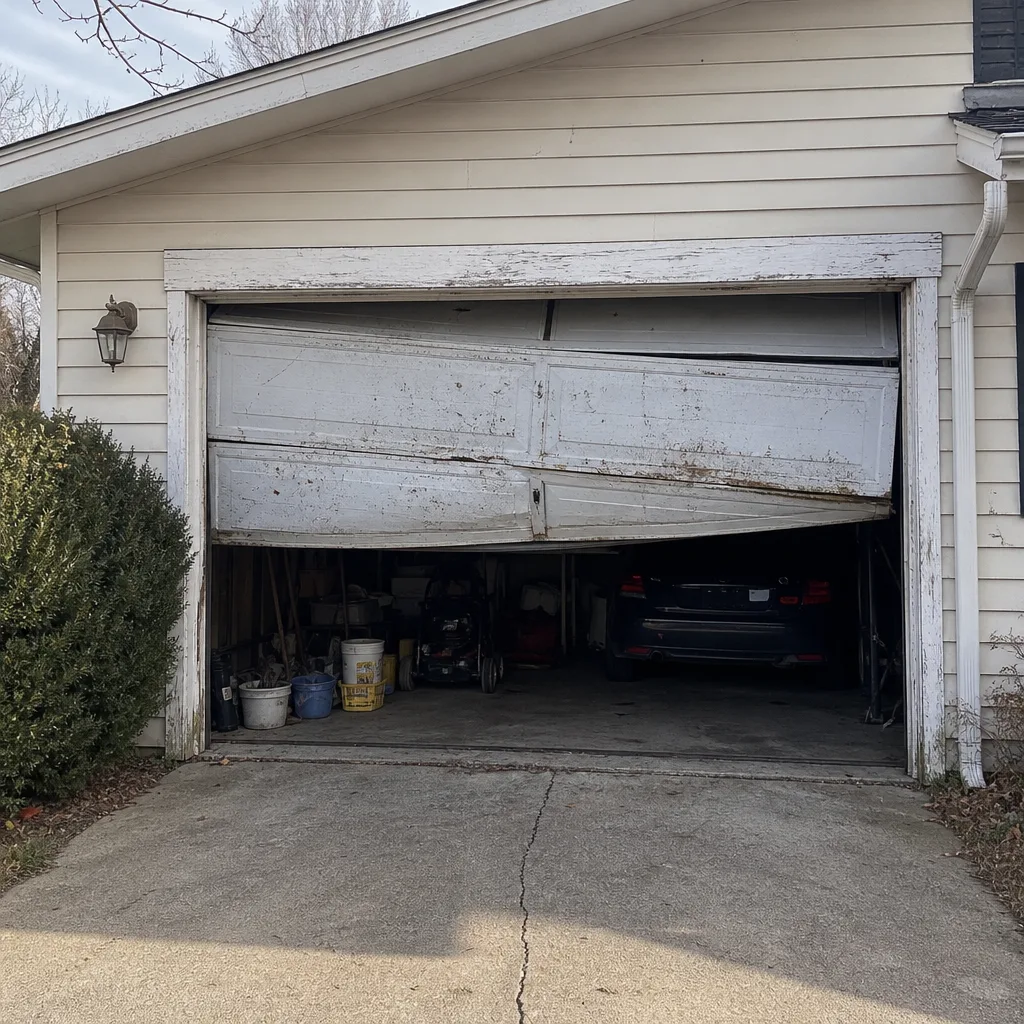 Before
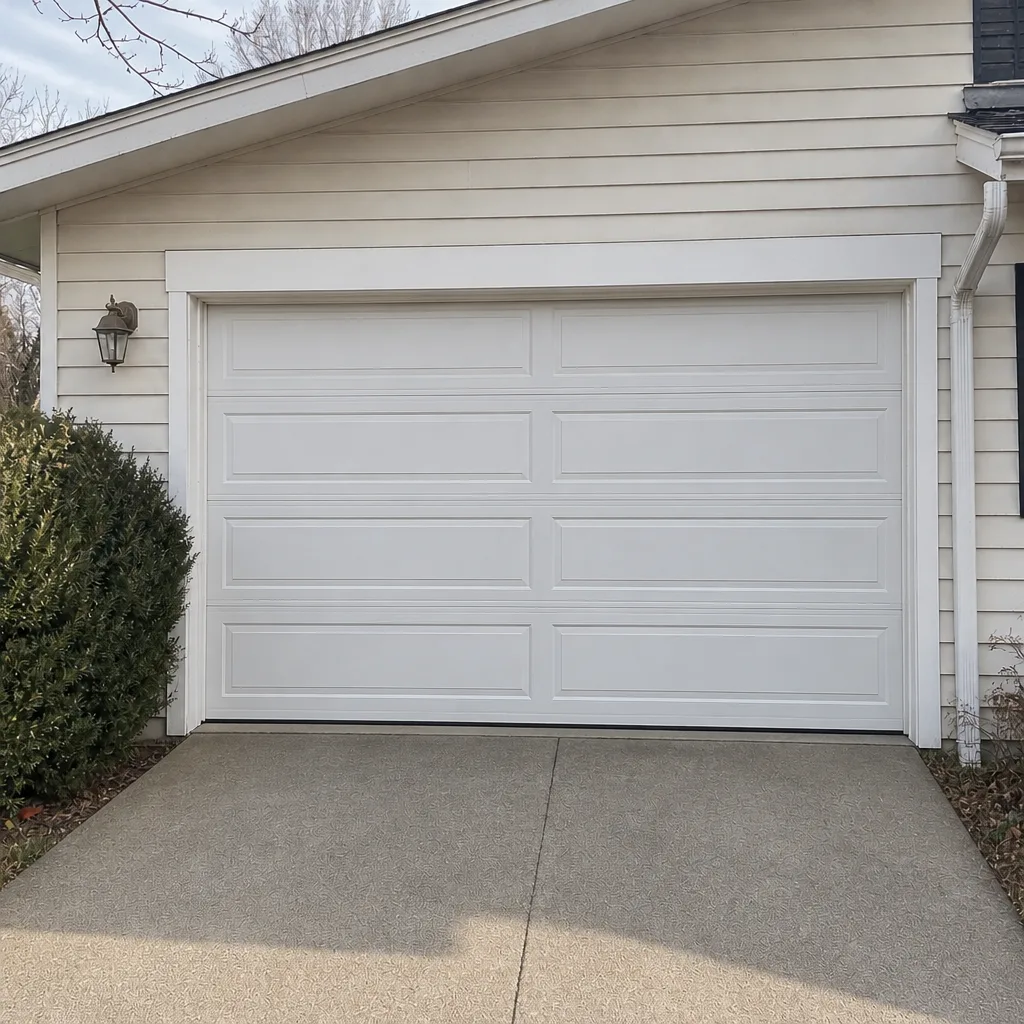 After
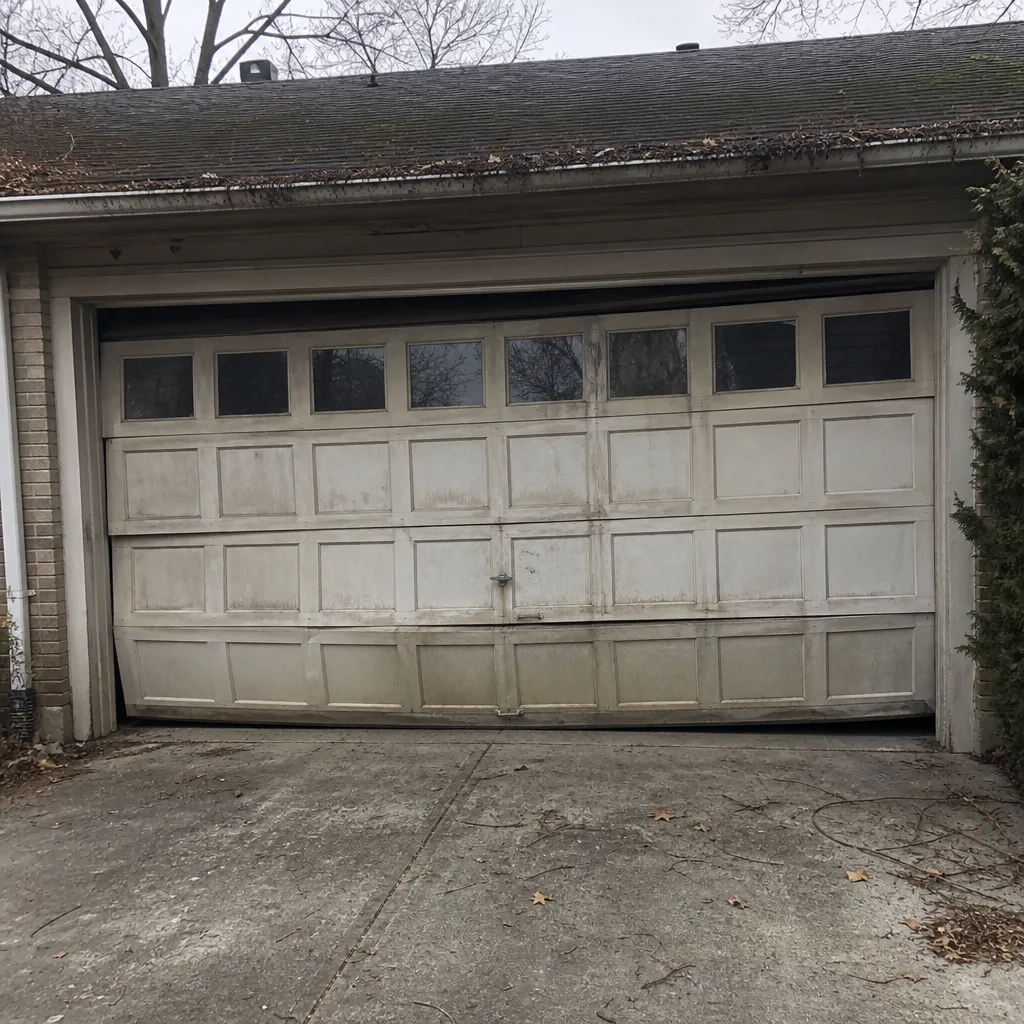 Before
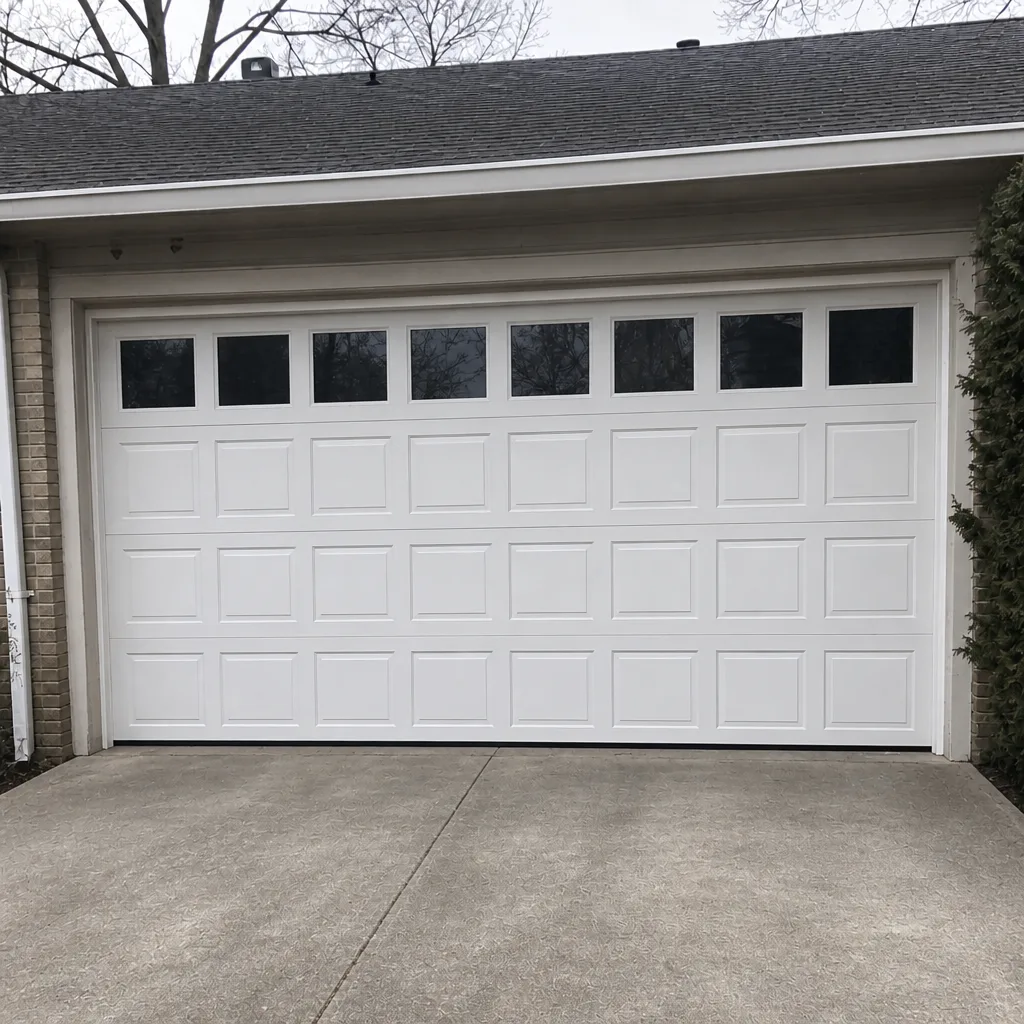 After
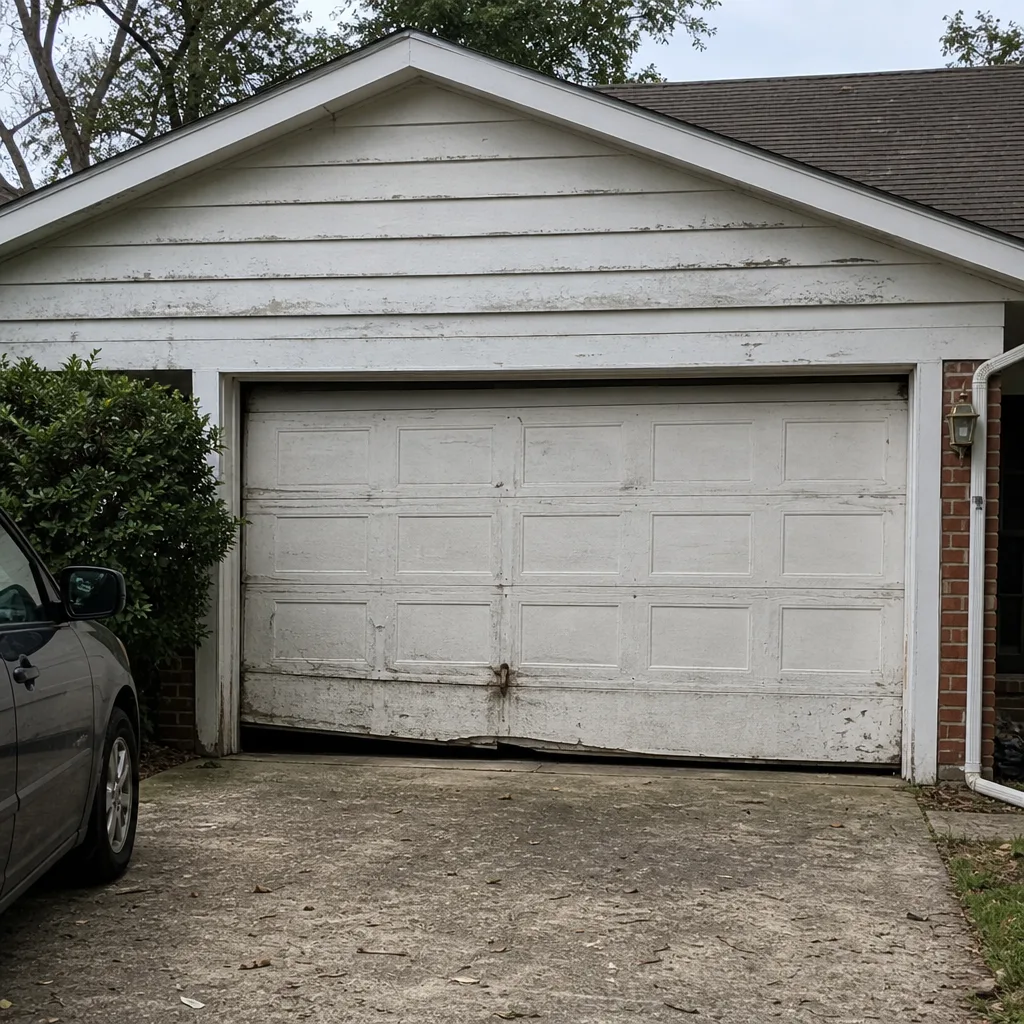 Before
 After
When to Call a Professional
Call a professional if a spring shows a gap or has popped, a cable is slack or off its drum, the door has come out of its tracks, the door won’t reverse on obstruction, or the door is stuck open or closed and your home’s security is affected. Those are immediate – stop using the door and call. Schedule a call within the week if you hear a new grind, scrape, or rattle, if the rollers look dry, if a remote or wall button is intermittent, or if you notice a small amount of rust on the springs without any gap or spiral pattern. For anything in between, describe the symptom and get a straight answer.
Garage Door Repair Northwood offers free estimates in Northwood – call (877) 492-1668. Our technicians have up to 9 years of experience, and because we handle repair, opener repair, springs, and installation, you don’t need a second call to a different specialist.
Frequently Asked Questions
A visible gap between spring coils is often the earliest sign, followed by a stretched appearance and the spiral rust pattern that weakens coils from the inside. Run the balance test – if the door won’t hold halfway up, the spring tension is already gone. Call (877) 492-1668 for a free estimate before the door fails completely.
Grinding is usually safe to operate briefly if the door still opens and closes normally, but it should be looked at soon. Grinding typically points to dry or worn rollers and hinges, and lubricating or replacing them early prevents a larger repair. If the noise becomes a scrape or a pop, stop using the door. Call (877) 492-1668 to book an estimate.
Jerky or hesitant travel is almost never the opener motor. It usually means the springs have weakened and the opener is straining to lift a door the springs should be handling. It can also indicate a worn roller, a hinge binding at one spot, or a cable off its drum. A free estimate will tell you which. Call (877) 492-1668.
Northwood’s temperature swings put repeated load on springs, cables, and seals, so the signs often show up faster in the cold months. A door that’s fine in mild weather can start to sag or gain a spring gap when the temperature drops hard. It’s worth checking the springs and cables when the seasons turn. Call (877) 492-1668 for a free estimate if you see anything new.
You can, but when a door has a pair of springs, it’s usually best to replace both at once because the second one is near the end of its life too. A single spring lasts less time than a matched pair. We’ll talk through what makes sense for your door. Call (877) 492-1668 for a free estimate.
Call for emergency service if the door is stuck open or closed and your home’s security depends on it, a spring has snapped, a cable has come off, or the door is off its tracks. These are time-sensitive failures, and we offer emergency service for exactly these situations. For a new grind, a dry roller, or a weak remote, a scheduled visit is the right choice. Call (877) 492-1668.
The Bottom Line
The warning signs of a garage door failure are specific, observable, and usually precede the failure by two to eight weeks. A gap between spring coils, a spiral rust pattern, a slack cable, a scrape or pop during travel, and a door that won’t hold its balance are the signals worth acting on. Catch them early and you’re scheduling a same-week repair; miss them and you’re calling in an emergency. Run a monthly checklist and the balance test, stop using the door the moment a spring or cable looks compromised, and let a specialist handle the technical work.
If anything in this guide describes your door right now, call (877) 492-1668 for a free estimate. Estimates are free, the price is quoted and agreed before any work starts, and a specialist will tell you exactly what’s happening and what it takes to fix it.
Written by the team at Garage Door Repair Northwood.