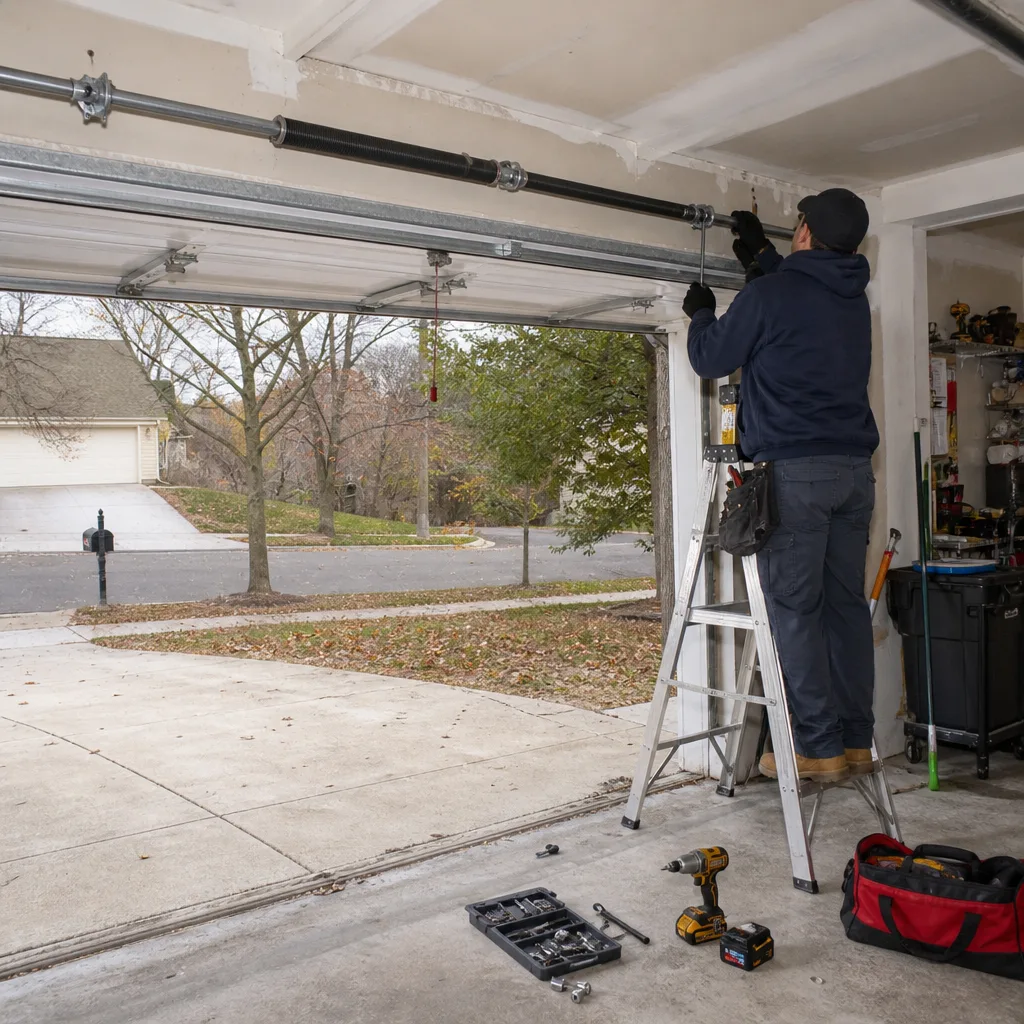
Last updated November 20, 2026
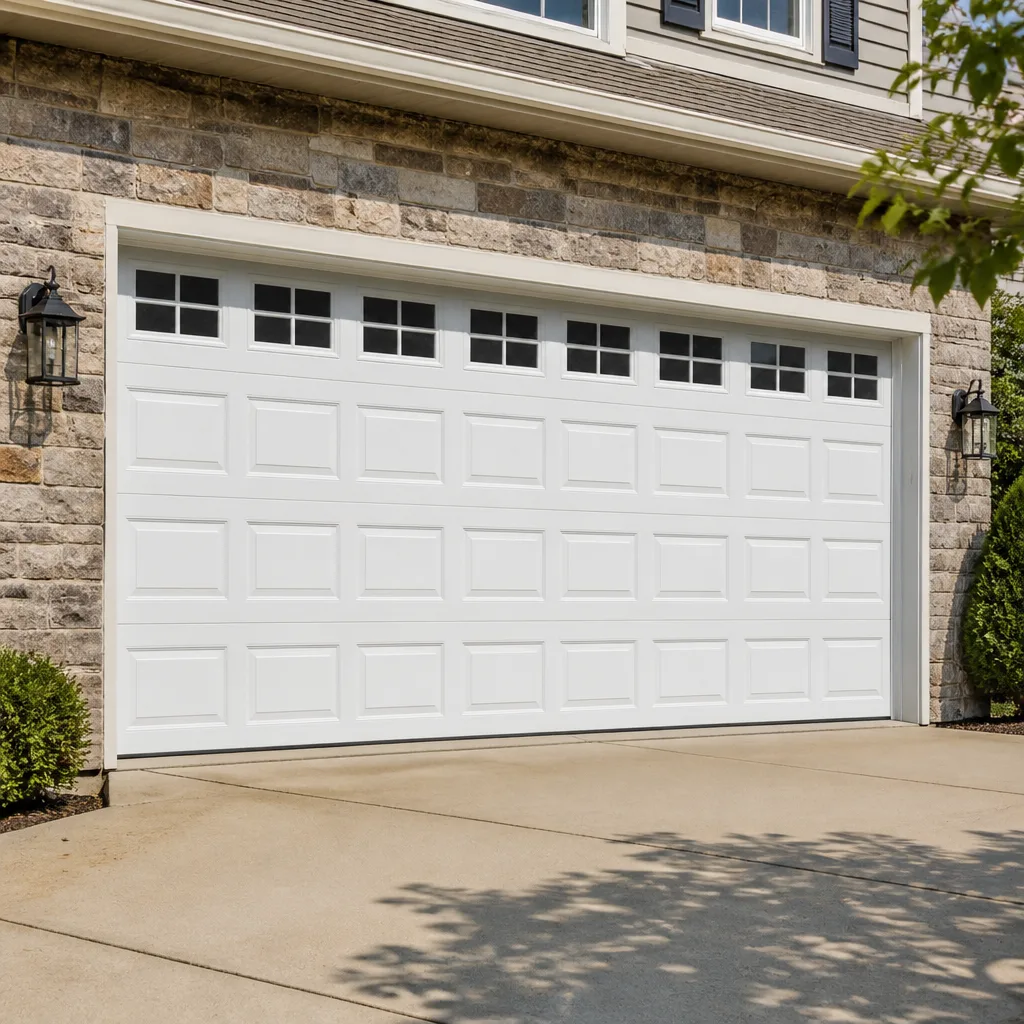 Raised-panel steel
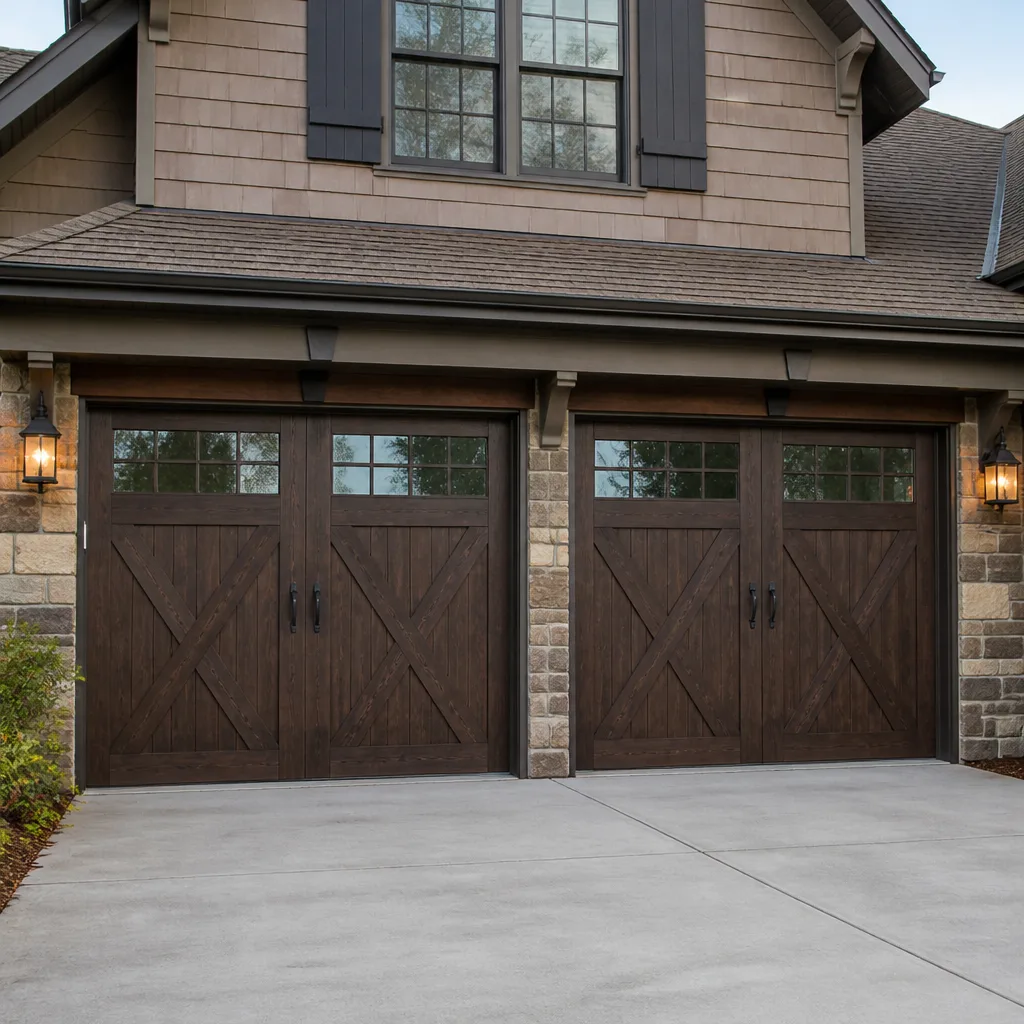 Carriage house
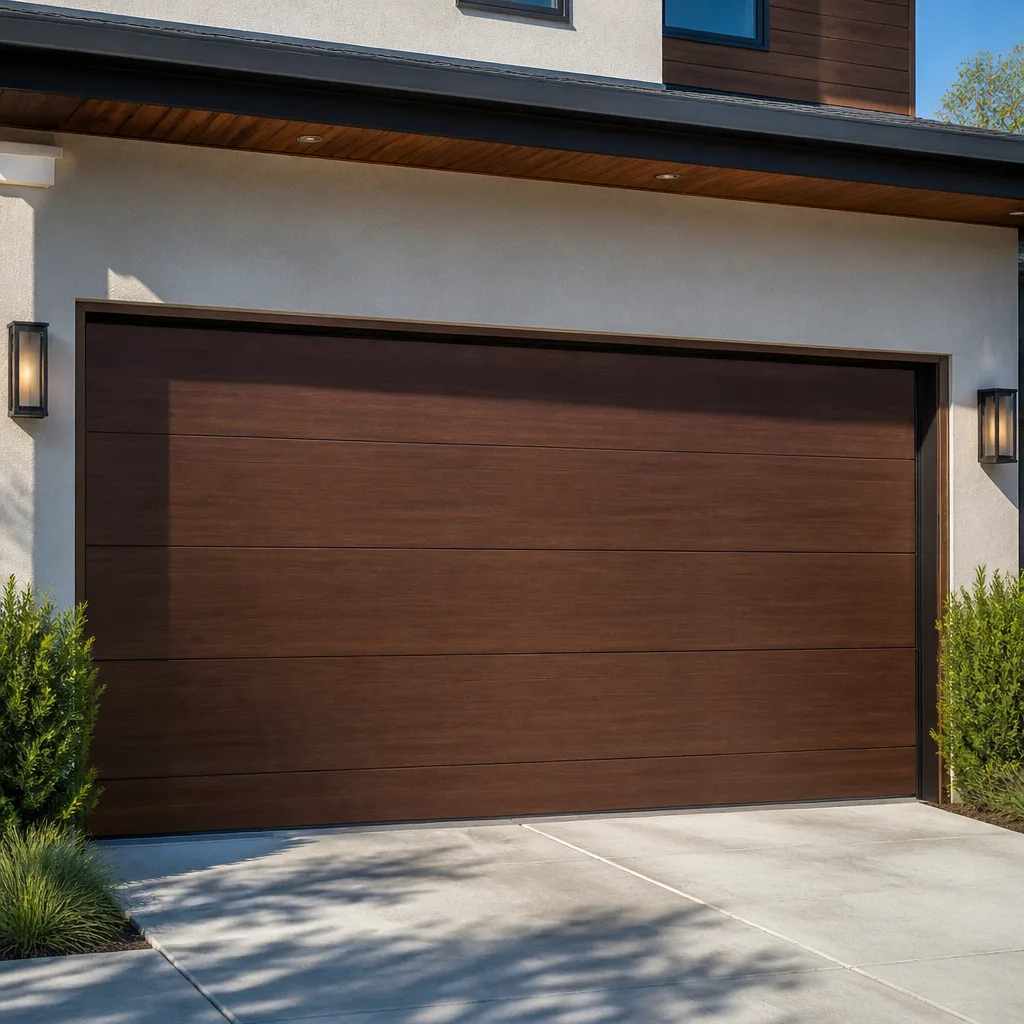 Modern flush
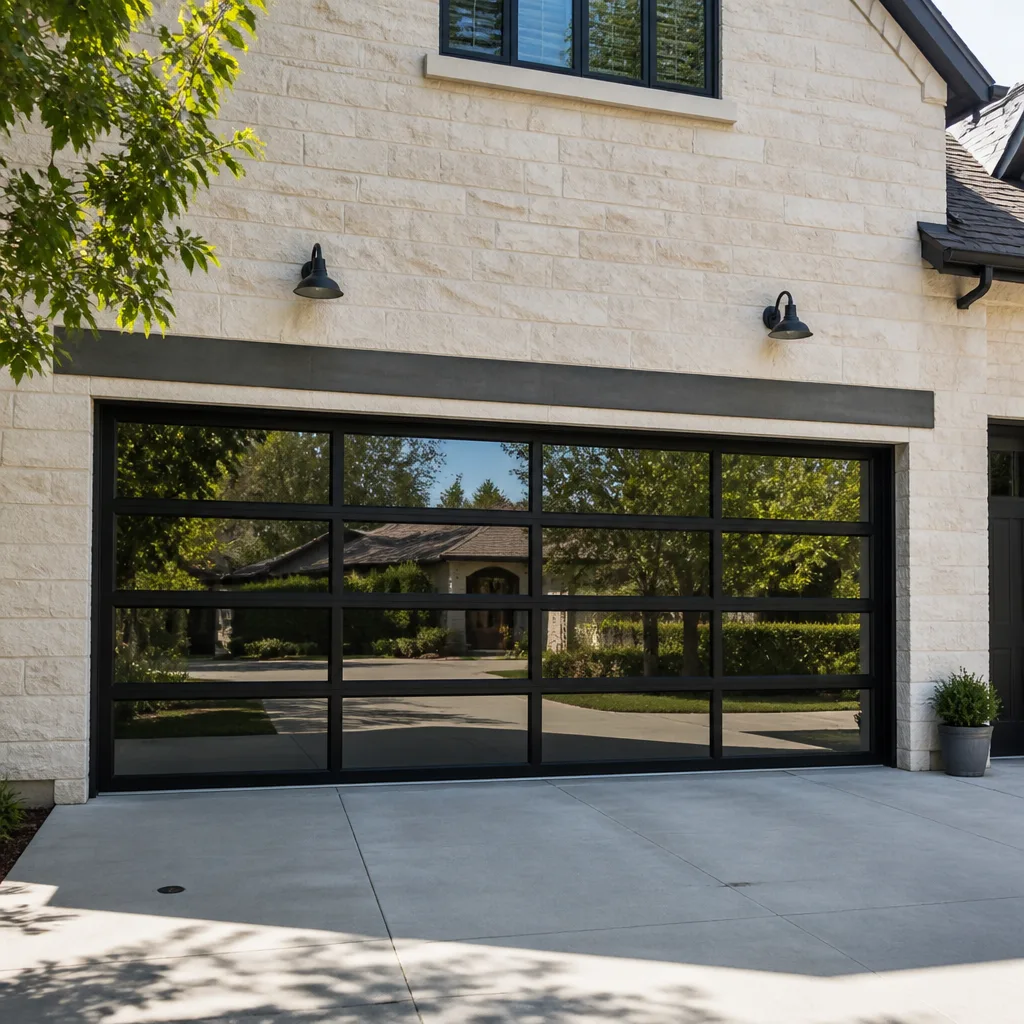 Full-view glass
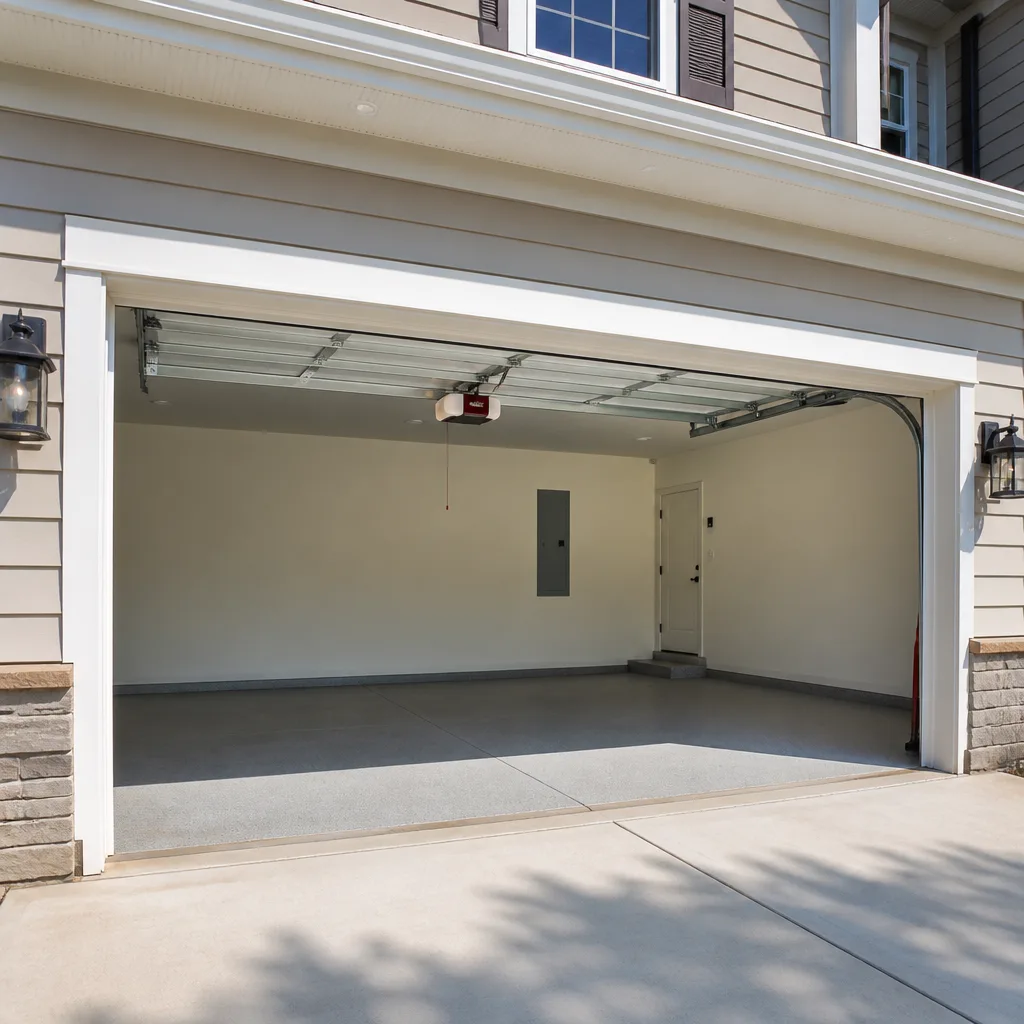 LiftMaster openers
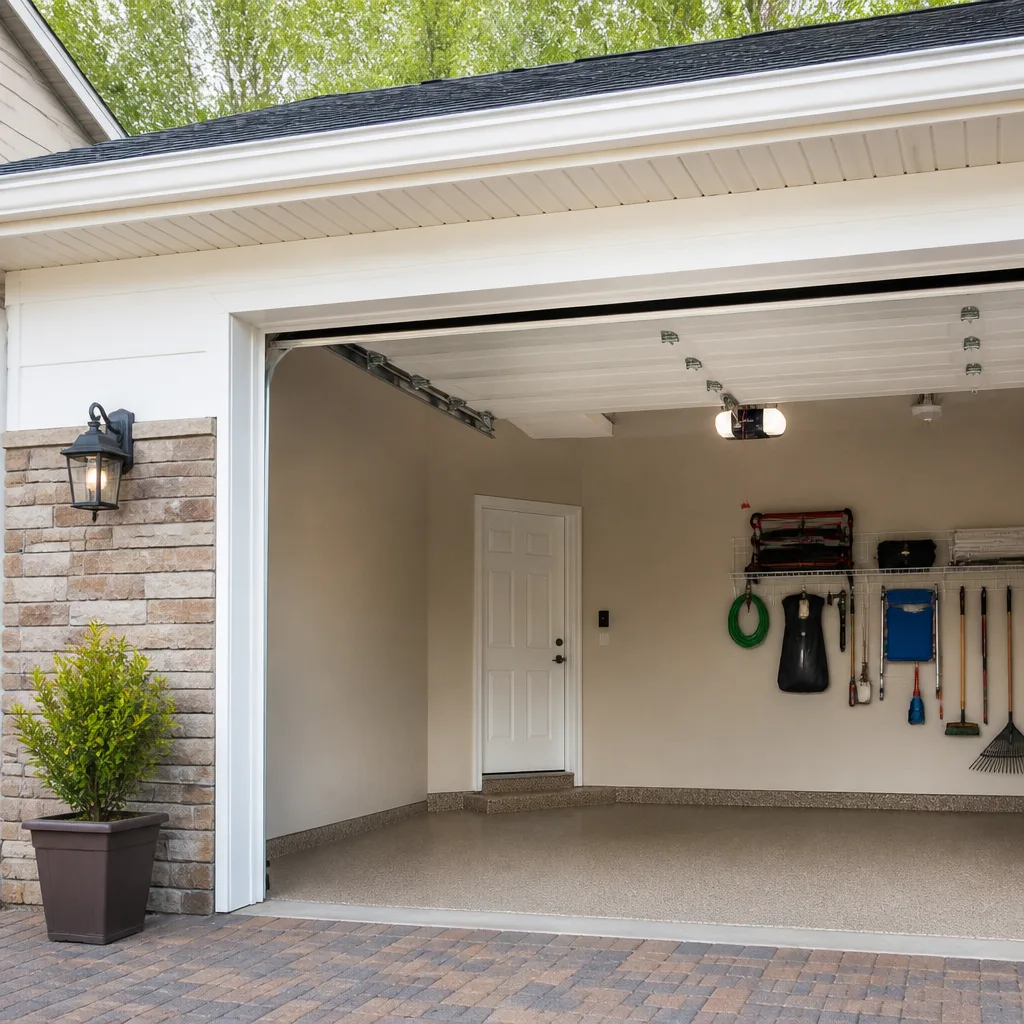 Chamberlain openers
Full 25-point door and opener safety check with every visit - springs, cables, rollers, tracks, and your LiftMaster or Chamberlain opener included
You get a price before we start. It does not change when the pro arrives.
Get your free estimateThe Complete Guide to Garage Doors in Northwood
Most garage door guides are written for a hypothetical homeowner in a hypothetical climate. That advice rarely holds up in Northwood, MD. Northwood sits in USDA Hardiness Zone 7a, where a summer day can push the heat index toward 100°F and a January morning can bring a wind chill below 20°F, and much of the local housing stock went up before the torsion spring systems that dominate today’s doors were standard. That combination changes almost every recommendation: which panel material survives the humidity, how much insulation actually pays back, which opener fits an older ceiling, and which brand is realistic to repair quickly when something fails. This guide maps those decisions to Northwood conditions rather than to a generic climate.
Quick Answer
A garage door in Northwood should be chosen for mixed-humid weather and freeze-thaw swings, not for the showroom. That usually means a steel or steel-backed door with an insulation R-value in the mid-single to low-double digits rather than the inflated numbers in brochures, a torsion spring system sized to the door’s real weight, and an opener from a platform a local technician can source parts for quickly. If your door is failing rather than aging out, a repair estimate tells you more than a showroom visit will; for full replacement, a free measure and a written price come first.
Styles & brands we work with
- Raised-panel steel
- Carriage house
- Modern flush
- Full-view glass
- LiftMaster openers
- Chamberlain openers
Table of Contents
- How Northwood’s Climate Shaped the Door You Have Now
- Panel Materials That Survive Northwood Humidity and Freeze-Thaw
- Why Pre-1990 Northwood Homes Limit Your Spring and Opener Options
- The R-Value That Actually Matters for an Attached Garage in Maryland
- HOA and County Aesthetic Rules That Affect Door Style
- Brand Availability and Which Repairs Move Fastest Locally
- Springs, Cables and the Repairs You Should Never Attempt
- How to Buy a New Door in Northwood, Step by Step
How Northwood’s Climate Shaped the Door You Have Now
Northwood’s weather works on a garage door in two directions at once, and that’s the part most buying guides skip. In summer, the humidity is high enough that the air inside a closed garage can stay damp for long stretches, especially if the door faces a shaded side of the house and never dries out. In winter, the freeze-thaw cycle is the aggressor: moisture works into seams and joints during a mild afternoon, freezes overnight, and pushes the material apart a little each time.
What that means for a door already on your house:
- Seams and bottom seals go first. A bottom weather seal that hardens in the cold no longer sits flat, and the gap lets in both water and cold air. It’s one of the least expensive fixes and one of the most consequential for the garage interior.
- Track alignment drifts. Wood framing around older garages moves with the seasons, and the track bolted to it moves too. A door that rubs or grinds in January and runs quiet in June is usually a track and framing issue, not a door failure.
- Springs lose tension faster in heavy-use homes. A door that cycles several times a day through temperature swings works its springs harder than one used twice a day. Age alone doesn’t predict spring failure; cycle count plus the seasonal load does.
- Hardware loosens. Hinges, rollers and brackets on a door that expands and contracts seasonally need occasional tightening, and a loose bracket is how a roller pops out of a track.
Understanding that pattern is what lets a Northwood homeowner tell the difference between a door that needs a $40 part and a door that needs a full system evaluation. When the problem is a door off its tracks or a snapped spring, that’s the moment to call for Garage Door Repair Northwood rather than keep forcing the door. Forcing a door with a broken spring or a dislodged roller does the expensive damage.
Panel Materials That Survive Northwood Humidity and Freeze-Thaw
Steel is the right default for most Northwood garages, but not all steel is the same, and the two alternatives each fail in their own way here.
Steel handles the humidity well because the finish does the work. A factory-applied finish on a quality steel door resists moisture on all faces, which matters in a mixed-humid climate where the inside face of the door is often as damp as the outside. Where steel fails is at the bottom edge and any cut or scratch, so a bottom seal and prompt touch-up on chips are the two habits that keep a steel door alive here. Steel is also the material most local technicians can adjust, re-hinge and re-fit without special parts.
Wood composite and wood-look products are where the freeze-thaw cycle does the most damage. Wood moves with moisture, and a garage door is a large flat panel with seams that hold water. Any composite that isn’t fully sealed at every edge is a long-term risk in Northwood, and the risk is worst on doors facing the prevailing weather. If you want the wood look, the practical approach is a steel door with a wood-grain finish rather than real wood panels.
Aluminum resists rust entirely, which sounds ideal until you consider that it dents more easily than steel and transmits temperature faster. For a garage that faces a lot of wind-driven rain and where rust has already been a fight, aluminum earns its place. For a Northwood home where the door faces a driveway with kids and bikes, steel is the more durable choice.
Clopay and Amarr both build steel and steel-backed doors in configurations that suit this climate, and both are brands we work on directly rather than subcontract. Whatever material you choose, the installation detail matters as much as the panel: a properly flashed, properly sealed opening keeps water out of the equation in the first place.
Why Pre-1990 Northwood Homes Limit Your Spring and Opener Options
A large share of Northwood homes went up before torsion springs became the default and before openers were designed around modern ceiling clearances. In those garages, the physical space above the door is often the limiting factor, not the budget.
The two constraints we run into most:
- Header space. A torsion spring sits on a shaft above the door, and the assembly needs clearance for both the shaft and the springs. Where the header is shallow or the ceiling sits low, there isn’t room for a standard torsion setup. The options are a low-headroom torsion configuration or a different mechanism entirely, and that’s a decision made after measuring, not before.
- Opener mounting and wiring. Older garages often have ceiling framing that wasn’t designed for a belt-drive or a chain-drive rail, plus wiring that may not meet current safety expectations. A modern opener with a safety reverse feature needs a clean mounting point and a working photo-eye setup, and retrofitting that into an older garage is its own small job.
This is also why extension springs still turn up on older Northwood doors. They work, but they’re a different mechanism with a different failure mode and different safety hardware requirements. If your door has extension springs, ask specifically what you have before authorizing any replacement. It changes the price and the parts list.
The practical answer for these homes is a proper measure before any commitment. A quote based on a quick look at an older garage is a guess. We measure the opening, the headroom, the side room and the framing before quoting, and the written estimate you receive reflects the actual configuration. That’s also why any installation work is scheduled around a measurement rather than promised on the spot. If your older door has quit and the garage is now exposed, emergency service can secure the opening in the meantime; when you’re ready to replace rather than repair, garage door installation starts with that free measure and a written price.
The R-Value That Actually Matters for an Attached Garage in Maryland
Garage door R-values are the most oversold number in the category. A manufacturer’s headline figure is measured in a lab under ideal conditions, and a door is installed into a real opening with gaps, a bottom seal, a frame, and a wall assembly the door doesn’t control. The number that matters is the whole assembly, and for a Maryland attached garage the useful range sits lower than the marketing suggests.
Here’s the part homeowners don’t hear often enough:
- For most attached garages in Maryland’s mixed-humid climate, a door in the mid-single digits to low-double digits of R-value is the practical target. Above that, the returns shrink fast because the frame, seal and surrounding wall become the weak links.
- An insulated door does more than hold heat. A two-layer or three-layer door with a backer or foam core is also quieter and stiffer, which matters for the door’s life in a climate that works it hard.
- Air sealing beats R-value at the edges. A bottom seal that makes contact and a frame that closes the gap will outperform a higher-rated door with a bad seal every time.
- If the garage isn’t conditioned, don’t buy the climate story. Insulation slows heat transfer rather than turning an attached garage into living space, and the honest advice for an unconditioned garage is to buy a door you like that seals well rather than spend for a rating you can’t use.
If you’re unsure what your garage needs, tell a technician how the space is used. A garage that hosts a workshop or a home gym has different needs than one that holds a car and a few boxes.
HOA and County Aesthetic Rules That Affect Door Style
Northwood’s residential character means many homes sit under a homeowners association, and a garage door is one of the most visible elements most HOAs regulate. The panel style, the color and sometimes the window configuration can all be governed, and replacing a door without checking first is how a project turns into a fight.
What typically gets regulated:
- Panel style. Raised-panel, carriage-house, flush and ribbed styles each read differently from the street, and some associations have an approved list.
- Color. Beige, white and earth-tone families usually pass; bright or unusual colors often need approval. Get the approval in writing before ordering.
- Windows and trim. Add-on windows or decorative trim can count as a change requiring approval even when the door itself is a like-for-like replacement.
- Baltimore County permit and setback considerations. Replacement of a garage door typically doesn’t raise a structural permit question the way an opening change can, but the safe habit is to call the county’s building department and ask what applies to your address before work starts. Requirements vary, and the answer comes from them, not from a contractor.
Because we handle the complete service lifecycle, garage door repair and replacement conversations in Northwood often start with “what will my HOA allow,” and the right move is to settle that before any order goes in. A new door is a several-week lead on some styles, so the approval timeline is part of the project timeline.
Brand Availability and Which Repairs Move Fastest Locally
Brand matters more at the repair stage than at the buying stage. A well-chosen door from any major manufacturer is a good door. The variable is whether the parts for it are available locally and whether the technician working on it knows the specific model’s quirks.
We work on systems from LiftMaster, Chamberlain, Genie, Clopay, Amarr, Wayne Dalton, Craftsman and Raynor, and that brand fluency speeds up diagnosis in a way that’s hard to overstate. A technician who knows how a Genie safety sensor behaves when its alignment drifts, or how a LiftMaster logic board reports a fault, gets to the right answer faster than one who reads the manual on your driveway.
On the door side, Clopay and Amarr are common in this region and their parts and panels tend to be straightforward to source. Wayne Dalton doors are also well-represented and their proprietary opener-integrated hardware behaves differently from a conventional setup, which is exactly the kind of detail that separates a quick repair from a stalled one. When a door needs a replacement panel or a specific hinge, brand familiarity is what turns a guess into an order.
On the opener side, garage door opener repair covers both legacy systems and the connected platforms homeowners now expect. A dead opener on a modern connected unit is often a sensor or a logic issue rather than a motor failure, and both are worth diagnosing before anyone quotes a replacement.
Springs, Cables and the Repairs You Should Never Attempt
Garage door springs and cables operate under extreme tension, and this is the one part of the system where the safety caveat is absolute: do not attempt to adjust, release or replace a spring or a cable yourself. A spring under tension holds the energy of the entire door, and the failure mode is sudden and violent. This is skilled trade work, and it’s the reason spring service requires specialist handling rather than a general handyman’s visit.
What you should know as a homeowner:
- One spring or a matched pair. Springs are commonly replaced as a matched pair because two springs of similar age fail close together. A price for one spring is not the price for a pair, and the estimate should make clear which you’re getting.
- A snapped spring sounds like a bang. If you heard a loud report from the garage and the door is now dead weight, that’s a spring failure. Don’t force the door open; call.
- A cable off its drum is a hazard. A door hanging unevenly or a cable visibly slack on one side is not safe to operate, even once.
- A door that reverses on its own or creeps down points to a spring, balance or opener issue that needs diagnosis before continued use.
When a door won’t open or close and the garage is left exposed, emergency garage door service exists for exactly that situation: the security of the house comes first, then the repair. A trained technician assesses the spring, cable and balance together, because a repair that addresses only one of those leaves the system unsafe. Call (877) 492-1668 if you’re unsure whether a door is safe to operate; that call is free and the answer may spare you a dangerous attempt.
How to Buy a New Door in Northwood, Step by Step
Buying a door in Northwood means matching the product to the house, the climate and the rules that govern the street, in that order. Here’s the sequence that works:
- Confirm what your HOA and the county will accept. Style, color and any window or trim changes should be approved in writing before anything is ordered.
- Get a real measure. The opening width and height, headroom, side room and how the door will be mounted are all measured on site. On an older Northwood home, this step is where surprises surface and where a low-headroom configuration is decided.
- Choose material and insulation together. Steel is the practical default for humidity and freeze-thaw; the R-value target for an attached garage in this climate is modest, so put more weight on sealing and panel construction than on the brochure number.
- Pick the opener to fit the garage. Belt drive is quieter, chain drive is simpler, and the brand needs to be one a local technician can service without waiting on a proprietary part.
- Get the written estimate before work starts. The price quoted and agreed before any work begins is the price, and the estimate should list the door, the opener if included, the hardware and the labor.
- Schedule the install. Installation is measured and ordered work, not same-day work, so the schedule reflects lead time for the door and the opener.
If any step along the way produces a guess instead of a number, ask again. A door is a long-term purchase and the local conditions are specific enough that a generic quote is worth questioning.
Common Mistakes to Avoid
- Choosing a door by showroom appearance alone. A door that looks right on a display wall can be the wrong fit for Northwood’s humidity and freeze-thaw if the finish and edges aren’t up to it. Judge the door on how well it seals, not just how it photographs.
- Buying R-value you can’t use. A high headline rating on an unconditioned attached garage is money spent on a number the frame and seal will undo. Spend the difference on a proper install and a good bottom seal instead.
- Assuming a modern opener drops into an older garage. Many Northwood homes built before 1990 have ceiling and header framing that doesn’t fit a standard rail or a torsion assembly. Measure before ordering, or the opener arrives and doesn’t fit.
- Skipping the HOA check. Ordering a door in a style or color the association won’t approve is the most avoidable delay in the whole process. Get it in writing first.
- Forcing a door with a broken spring or a slack cable. This is the mistake that turns a repair into a full replacement. If the door is dead weight or hanging unevenly, stop and call.
- Replacing one spring when a matched pair is due. A pair of springs of similar age fails close together, and replacing one leaves the other waiting. Ask which you’re getting and why.
- Hiring whoever answers the phone fastest without checking the brand. Ask whether the technician works on your specific door and opener make. On a Wayne Dalton or a connected LiftMaster, that answer changes the outcome.
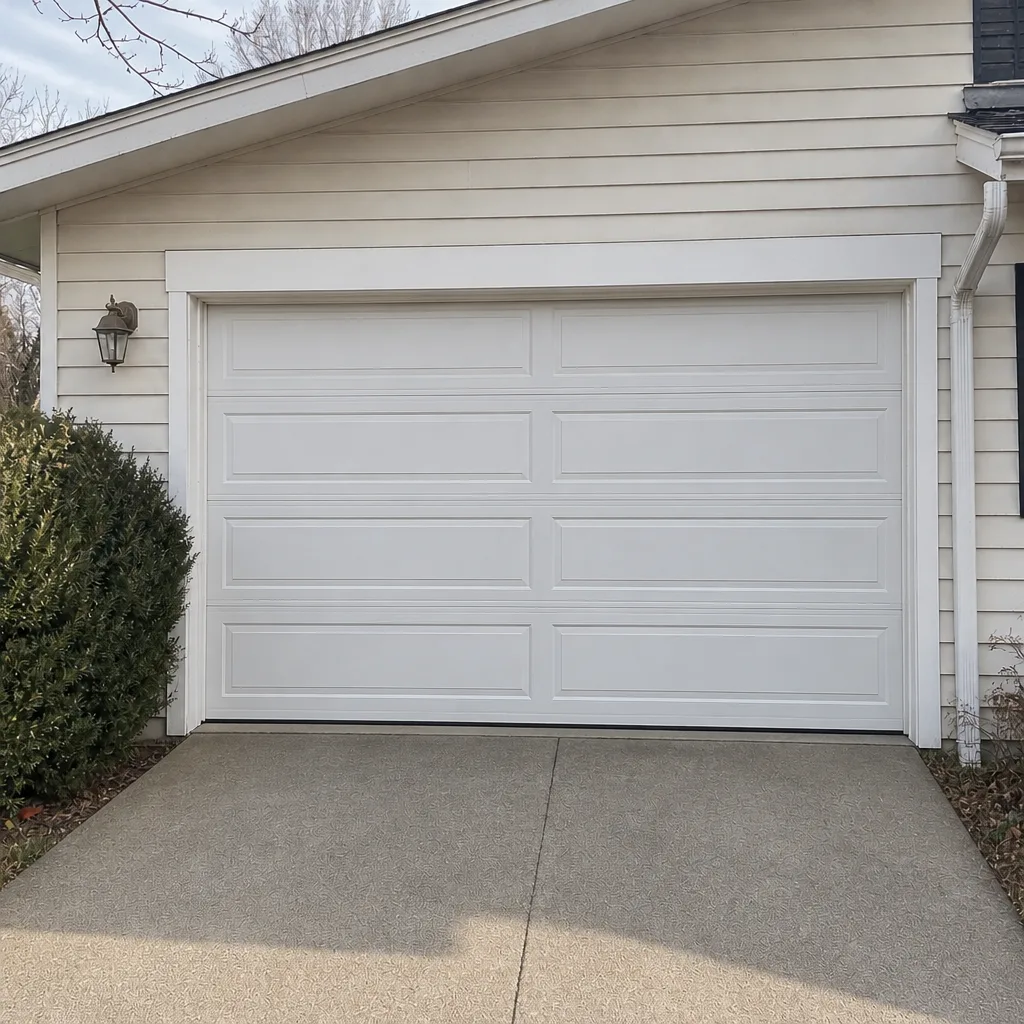
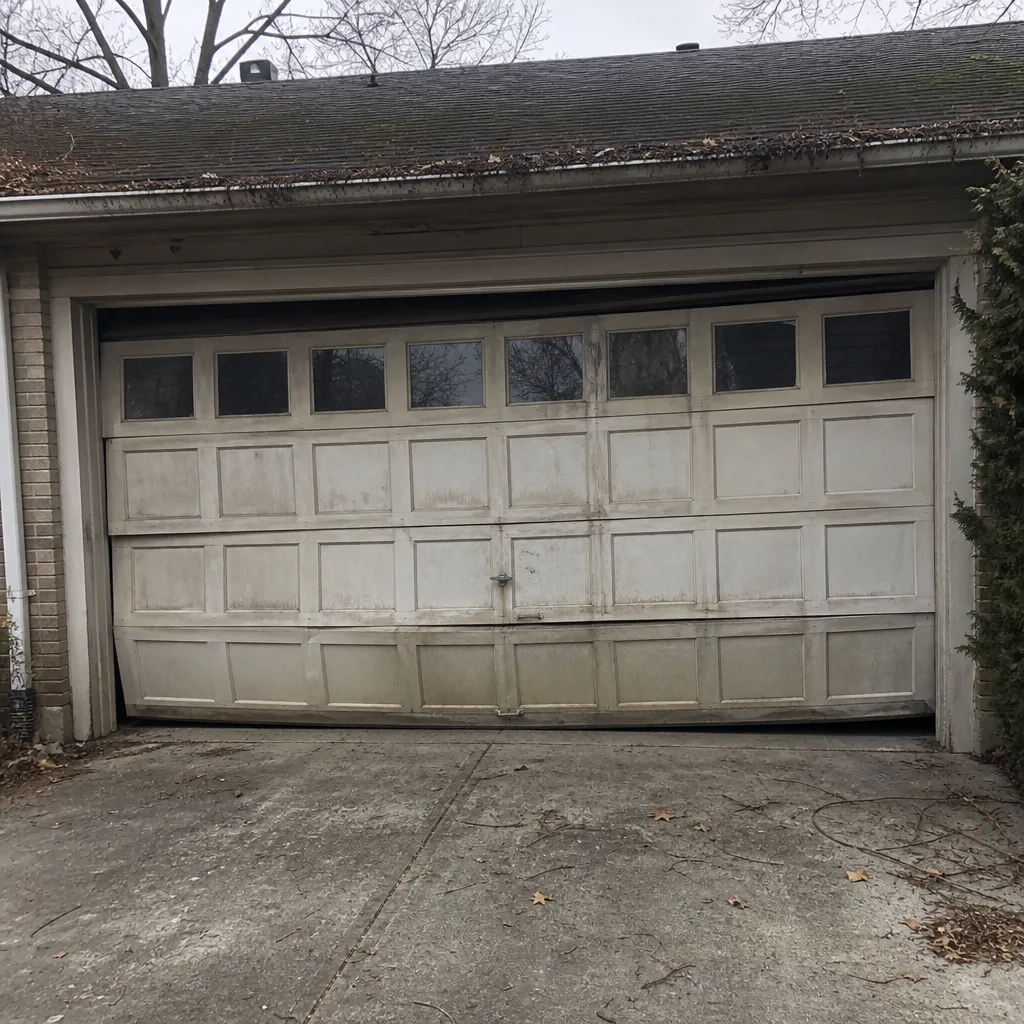
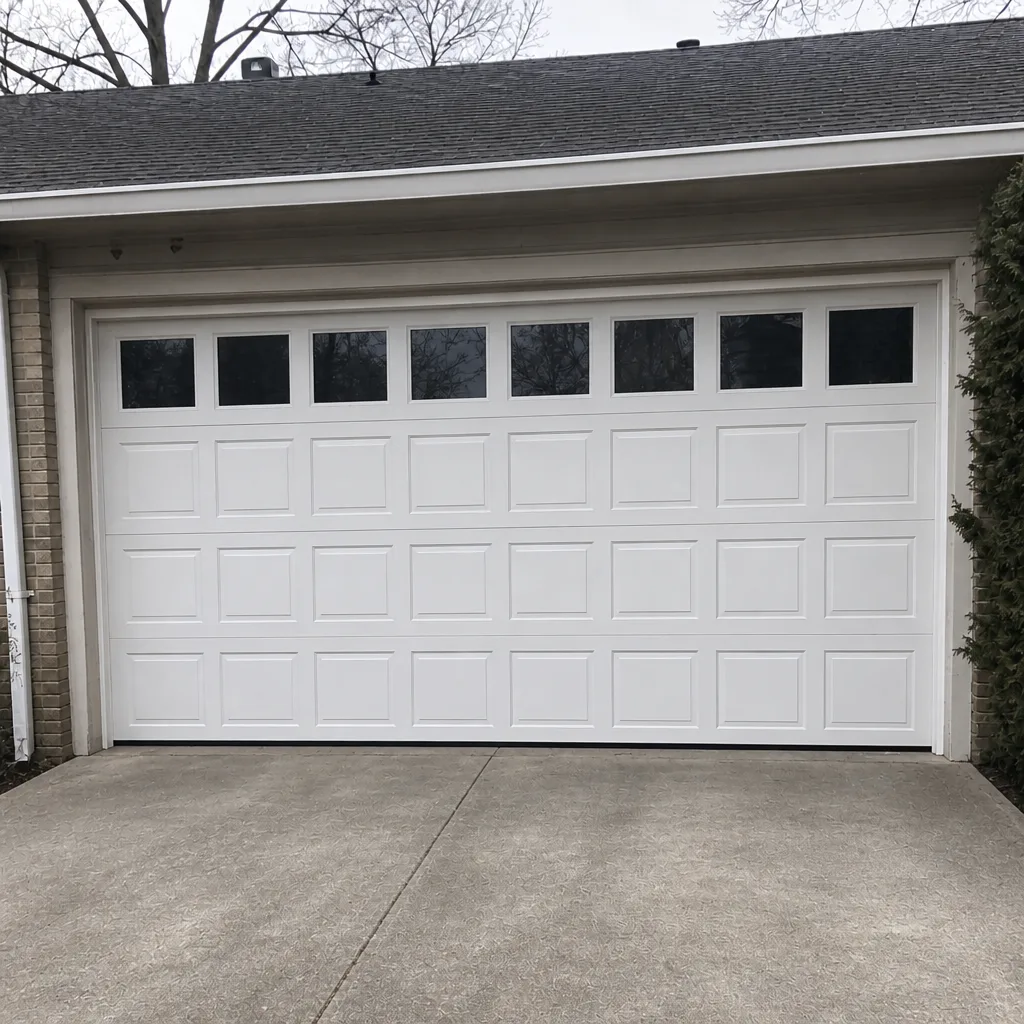
See the difference
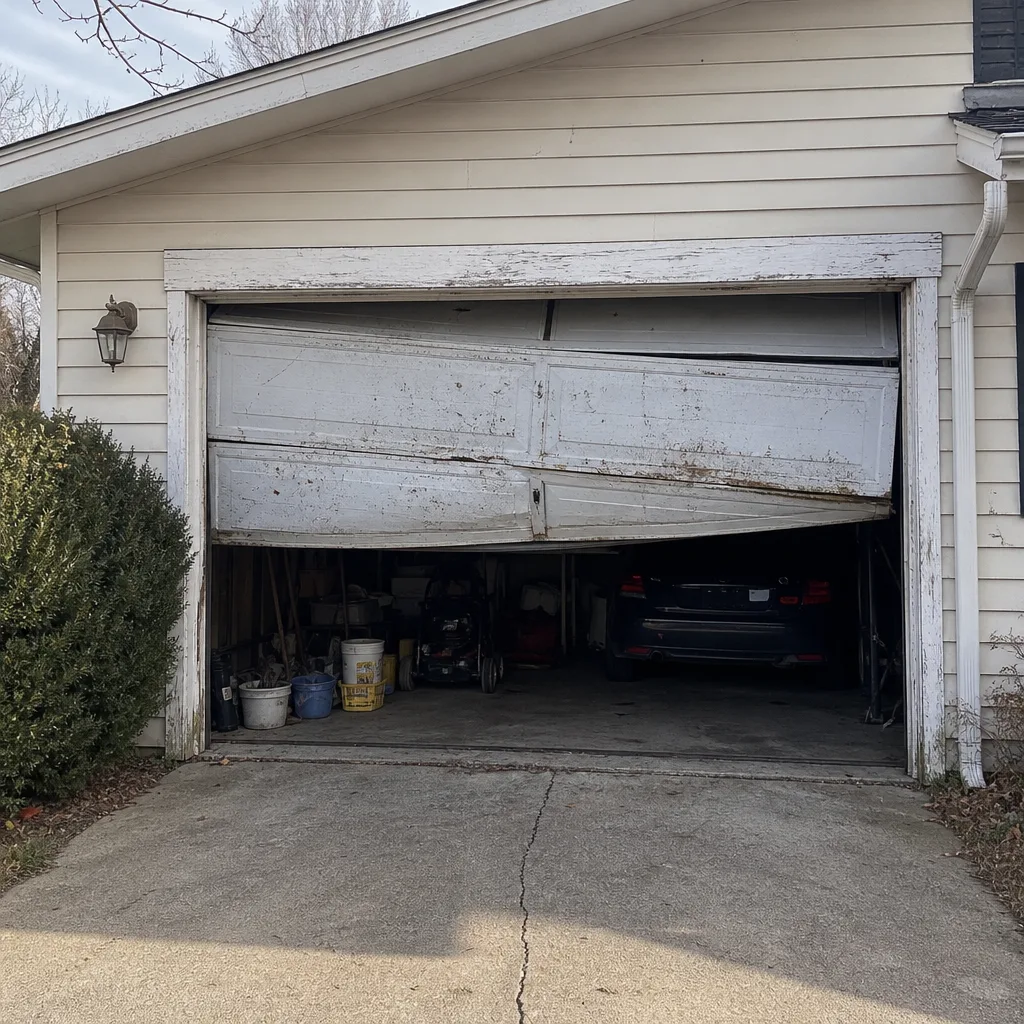 Before
 After
 Before
 After
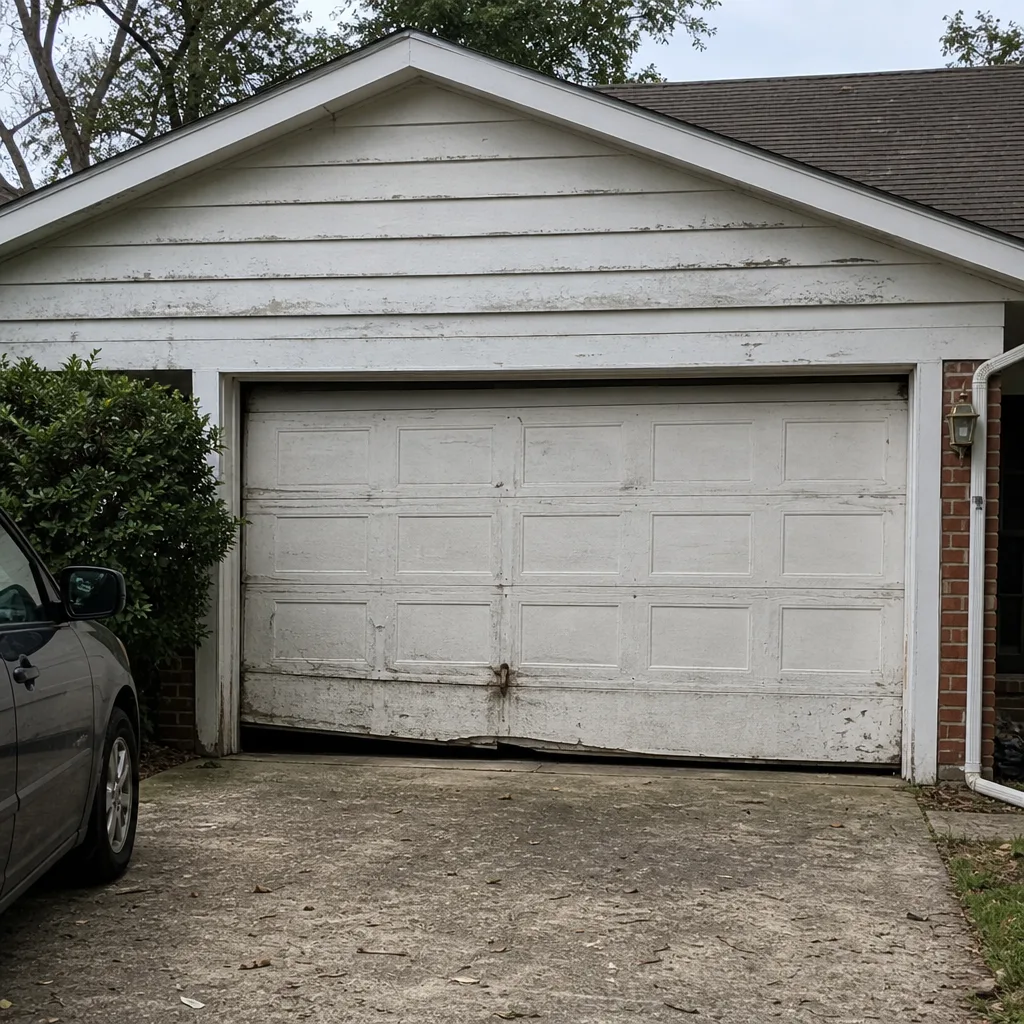 Before
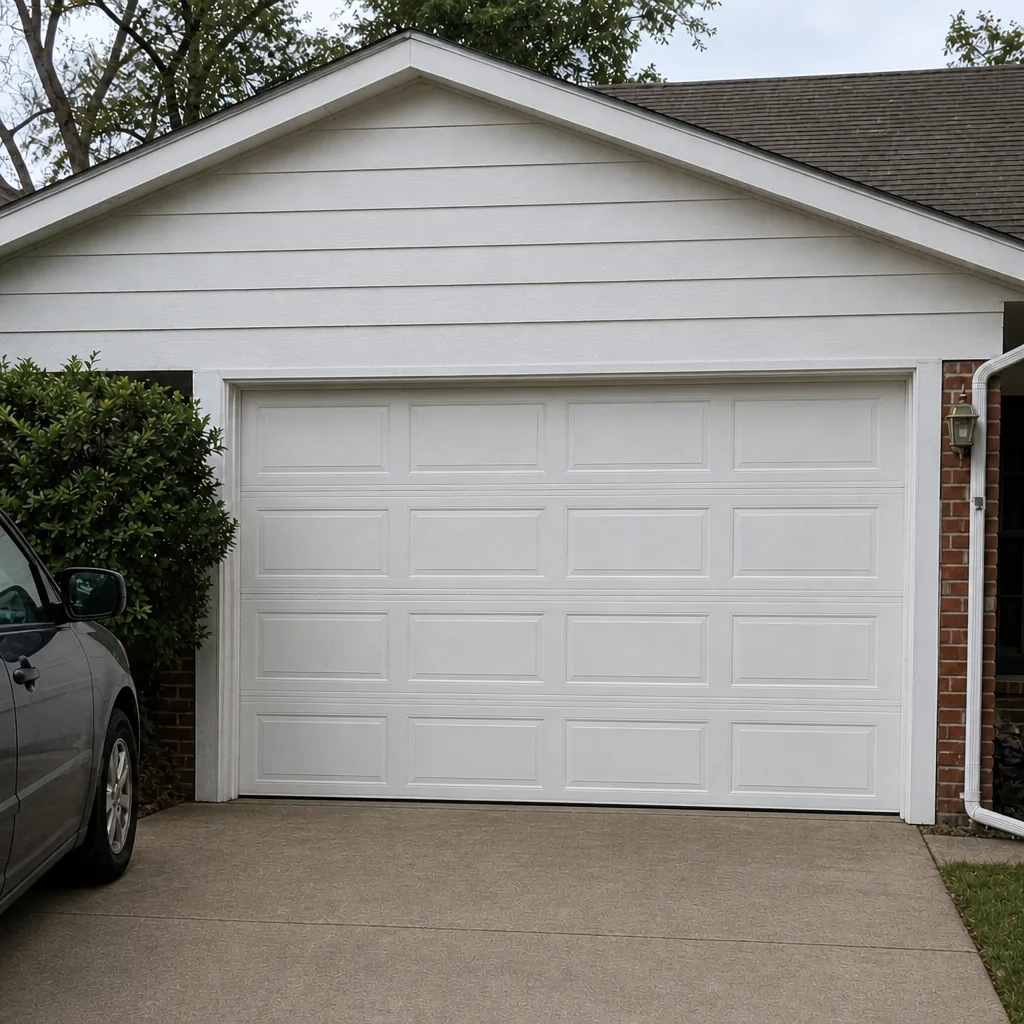 After
When to Call a Professional
Call a professional when the door won’t move, moves unevenly, reverses on its own, or makes a sound it didn’t make before. Call when a spring has snapped, when a cable is slack, or when the door has come off its tracks; those are safety situations, not maintenance items. Call when the opener runs but the door doesn’t, or the door runs but the opener won’t, because the diagnosis splits between the two systems. On an older Northwood garage, call before you buy anything, so the measure comes first and the quote matches the actual opening and headroom. Garage Door Repair Northwood offers free estimates in Northwood. Call (877) 492-1668 and we’ll talk through what the door is doing before anyone commits to a fix.
Frequently Asked Questions
Repair costs depend on the part and the system: a spring replacement, a cable and roller set, a track adjustment and an opener diagnosis are each priced differently, and a pair of springs costs more than one. We don’t quote from a phone description because the estimate is per job, and the written estimate you receive before any work starts is the price you pay. Call (877) 492-1668 for an exact quote; estimates are free.
If the door won’t open or close and the house is left exposed, call right away and we’ll talk through the urgency. Emergency garage door service exists for exactly that situation, and response is fast during the scheduled service window. Call (877) 492-1668 and we’ll do our best to get to you.
No. The price is quoted and agreed before any work starts, and the written estimate sets the final price. If the inspection turns up something the estimate didn’t cover, we explain it and you decide before anything proceeds. Call (877) 492-1668 for a free estimate.
The local professional we connect you with is licensed and insured as their state requires, and our technicians have up to 9 years of experience. They’re trained on the major door and opener brands rather than on general handyman work. Call (877) 492-1668 with questions about your specific door.
Often you can, but it’s usually not the better choice. Springs are commonly replaced as a matched pair because two springs of similar age tend to fail close together, and a single replacement leaves the second one ready to go. The estimate we write makes clear whether one spring or a pair is included, so there’s no confusion about the price. Call (877) 492-1668 to talk through your door’s setup.
Steel holds up best for most Northwood homes, because a factory finish resists the humidity on both faces of the door and the material tolerates freeze-thaw without moving. Wood composite is the most vulnerable here because it swells at the seams, and aluminum resists rust but dents more easily. Whichever you choose, the bottom seal and the install detail do as much for the door’s life as the panel material. Call (877) 492-1668 for an honest recommendation for your garage.
The Bottom Line
Northwood’s mix of USDA Zone 7a weather, a housing stock that predates modern torsion springs, and HOA oversight on street-facing details means the generic garage door advice doesn’t fit this town. Choose steel for the humidity and freeze-thaw, buy insulation to a practical R-value rather than a brochure number, and measure before ordering on any older home where headroom is tight. Springs and cables belong to a trained technician, never to a weekend attempt. If the door is failing, an estimate tells you more than a showroom will; if it’s time to replace, a free measure and a written price come first. Garage Door Repair Northwood works on all the major door and opener brands, from Clopay and Amarr doors to Genie and LiftMaster openers, and one call covers repair, springs, openers and full installation. Reach us at (877) 492-1668 for a free estimate.
Written by the team at Garage Door Repair Northwood.